

Here’s the starchy vegetables list you need for a health boost
You ask: are starchy vegetables bad for you; do they spike your blood sugar; how much is okay to eat; and what’s on a starchy vegetables list?
What do potatoes and tomatoes have in common?
What about pumpkin and zucchini?
From my perspective – the perspective of a registered dietitian nutritionist and certified diabetes care and education specialist – they’re all wholesome vegetables. Tomatoes and zucchini are nutritious non-starchy vegetables, and potatoes and pumpkins are nutritious starchy veggies.
I eat them all. And if you like them, I want you to eat them too.
The difference between non-starchy & starchy veggies
All vegetables are bursting with good nutrition. Eat any veggie, and you’ll get a host of vitamins and minerals. You’ll score one or more types of fiber, and you’ll fight disease with a plethora of health-boosting phytochemicals like carotenoids and indoles.
But you may wonder if starchy vegetables are bad for you because of their carbohydrate content. According to some low-carb and keto dieters, you should avoid potatoes, pumpkin, and other starchy vegetables because they portend high blood sugar, weight gain, and regret.
I disagree. But I do typically recommend eating at least 3 times as much non-starchy vegetables as starchy foods, including grains.
If you want to see how that plays out on the dinner plate, check out this meal planning tutorial.
Starchy vegetables have more calories & carbs
In general, a 1/2 cup serving of starchy vegetables, like corn, provides about 60 calories and 15 grams of carbohydrates. The same amount of non-starchy vegetables, such as broccoli, has only about 25 calories and 5 grams of carbohydrates. That’s why I push higher quantities of non-starchy vegetables.
Eating TONS of non-starchy vegetables boosts my nutrition and helps me manage my weight. Grab a printable list of non-starchy vegetables here. And this list is deliciously long!
If you have diabetes or prediabetes, your blood sugar will be easier to manage when you fill up on non-starchy veggies and limit their starchy cousins to a smaller serving, say 1/2 cup or perhaps as much as a full cup.
How much carbohydrate?
You do not need to swear off potatoes, winter squash, and corn to manage your blood sugar. But you may want to be more specific about the carb counts of various starchy vegetables. Count 15 grams of carbohydrate for each of the following:
- 1/2 cup corn, peas, parsnips, potatoes, sweet potatoes
- 1 cup winter squash, including pumpkin, acorn, and butternut squashes
- 1/3 cup plantain and cassava
Learn how to carb count for diabetes blood sugar management.
Examples of starchy vegetables
+ why they’re good for you even with their carbs and calories

Even with more calories and carbs than non-starchy vegetables like asparagus, tomatoes, green beans, spinach, and cabbage, starchy vegetables are far from nutritional duds. Consider these favorites:
White potato: The humble spud boasts fiber, vitamin C, blood pressure-friendly potassium, and quercetin, an antioxidant flavonoid associated with reduced risk of stroke, heart disease, and other health problems.
Corn: Along with a host of vitamins, minerals, and fiber, corn has two important carotenoids. Though we consume lots of carotenoids – all cousins to beta-carotene – only lutein and zeaxanthin make their way to the macula of the eye. And that’s where they do their magic. The macula, constantly exposed to light, is at risk of oxidative damage, which can lead to age-related macular degeneration.. But lutein and zeaxanthin do double protection duty – as long as we have enough in our diets. First, they filter the light. And second, they block oxidative damage because they serve as antioxidants.
And what else? Lutein and zeaxanthin travel to the brain too, where they seem to protect us from cognitive decline.
Green peas: Find more eye-protecting, brain-boosting lutein, and zeaxanthin here.
Sweet potato: You’ll get a terrific dose of beta-carotene in a sweet potato, along with some fiber, vitamin C, and potassium. But the white potato has more potassium. In fact, one report listed the white potato as the least expensive source of potassium in the supermarket.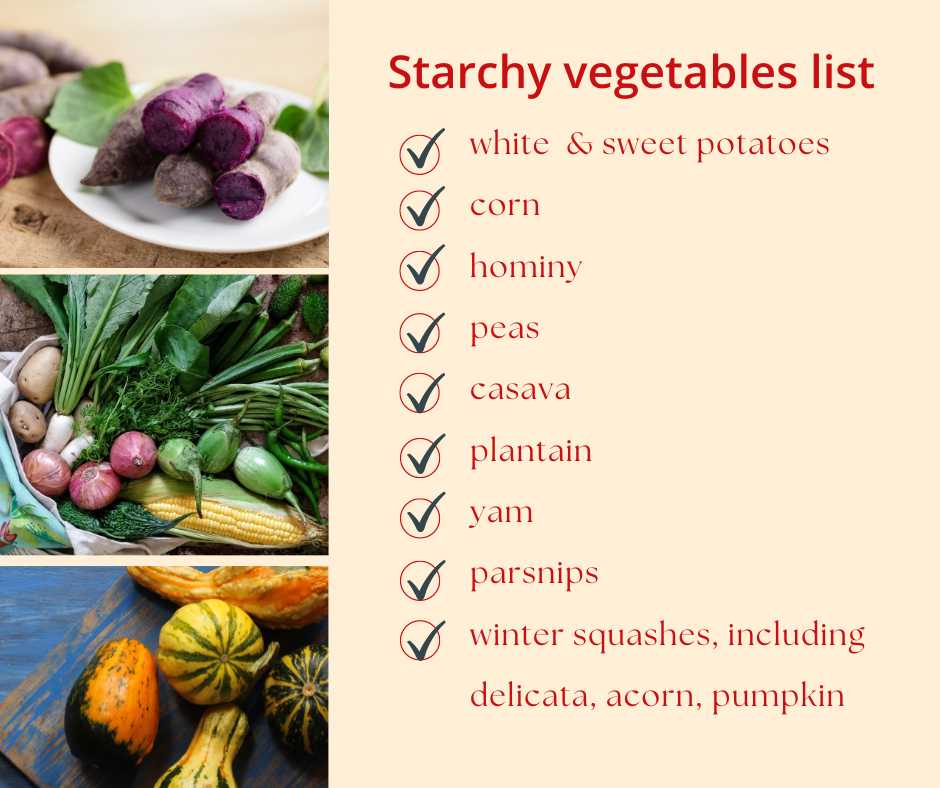
Starchy vegetables list
This is a much shorter list than my non-starchy vegetables list.
| Cassava | Plantain |
| Corn | Potato |
| Hominy | Sweet potato |
| Parsnips | Winter squash, including pumpkin, acorn, butternut, and delicata |
| Peas | Yam |
The bottom line on starchy vegetables
They’re wholesome vegetables.
Potato, tomato, pumpkin, and zucchini are all good for you. But because potatoes, pumpkins, and other starchy vegetables give us higher calorie and carb counts, most of us will do better eating many more non-starchy veggies than starchy ones. Starchy vegetables are not bad for you. And they’ll spike your blood sugar only if you eat too many carbohydrates.
Want to know more about healthy foods? Get the guide that answers your questions about what to eat for prediabetes.
Filed Under: Meal Planning, Myth Busting, Nutrition
Tagged: Vegetables, blood sugar, carbohydrate, diabetes, meal planning, prediabetes, starch, starchy vegetables, weight loss

Jill Weisenberger
I'm Jill, and I believe simple changes in your mindset and health habits can bring life-changing rewards. And I don't believe in willpower. It's waaaay overrated. As a food-loving registered dietitian nutritionist, certified diabetes care and education specialist and certified health and wellness coach, I've helped thousands of people solve their food and nutrition problems. If you're looking for a better way to master this whole healthy eating/healthy living thing or if you're trying to prevent or manage diabetes or heart problems, you'll find plenty of resources right here.
Leave a Reply
4 Comments
Leave a Comment
Welcome to my Blog
Hi there! I'm Jill, a nutrition & diabetes expert and the author of 4 books.

I believe simple changes in health habits can bring you life-changing rewards.
And I believe willpower is way overrated.
Right here is where you can discover the mindset and habits to stick with healthy lifestyle choices most of the time - and drop the guilt when you don't.
Get the Second Edition!

Featured Posts



This was so helpful and I can do better meal planning. Thank you.
Yay!
I have many health issues. Praying that what I have learned here will help me continue to enjoy the foods I love, with respect to their carb/calorie content and that it helps me to get my weight and health in control!!
Welcome! Here are a few article you might find helpful:
https://jillweisenberger.com/how-to-end-the-food-rut/
https://jillweisenberger.com/build-a-healthy-breakfast/
https://jillweisenberger.com/know-what-to-eat-plate-method/
https://jillweisenberger.com/manage-food-cravings-sweet-salty-favorites/
Let me know what you want to hear more about.