

You need more omega-3 fats and here are easy ways to get them
Here’s a primer on omega-3 fatty acids, the heart-healthy fats in fish, walnuts, chia seeds, and more. But only a few more. Protect your heart, brain, and eyes!
My favorite way to get heart-healthy omega-3 fats is to eat fish. It’s easy: I love fish for its taste, versatility, and nutrient profile.
But my favorite way is not the only way.
Whether you eat fish 2 – 3 times a week (like me), only now and then, or never ever, you need these unique omega-3 fatty acids from the sea. Here’s a primer about these heart-healthy fats to help you decide if you get enough. Unfortunately, research tells us that most people don’t. In the U.S., 90% fall short.
Keep reading for tips to get more.
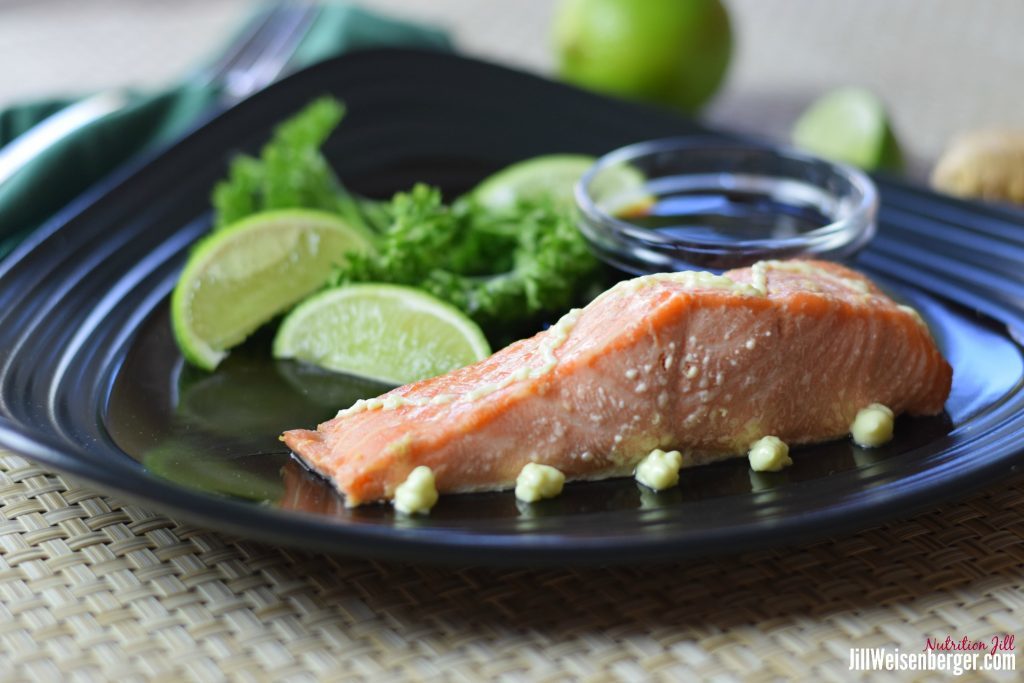
This easy wasabi salmon is just the right amount of spice and fits perfectly on a brain-healthy diet.
2 types of omega-3 fats
All omega-3 fatty acids are polyunsaturated. There are two main types – the ones that come from the land and the ones from the sea. You need both.
Your body can’t make omega-3 fatty acids, so you must get them from food or supplements.
- ALA is primarily in walnuts, seeds, and seed oils. We can call these sources land plants.
- EPA and DHA are in seafood and algae.
Your body converts only a tiny bit of ALA into EPA and DHA, so eating fish and taking supplements are the only practical ways to boost EPA and DHA levels in your body.
These heart-healthy fats have lots of jobs
About your heart
The American Heart Association (AHA) tells us to eat fatty fish at least twice weekly to ensure an average daily intake of about 250 mg of EPA and DHA. No other food naturally provides a hefty dose of these health-boosting fatty acids. According to the AHA, they decrease your risk of having dangerous, abnormal heartbeats; lower your blood triglyceride levels; and slow plaque formation in your blood vessels.
One important point: It’s impossible to know if the health benefits are from EPA and DHA, the combination of various nutrients in seafood, or the avoidance of greasy burgers, fried chicken nuggets, and nachos when you put seafood on your plate.
My guess: All of the above.
About your brain
DHA is a critical component of your brain, and some research finds that diets rich in EPA and DHA (the omega-3 fats from the sea) are associated with better cognitive function in aging and among people with heart disease.
It’s critical for developing babies too. The American Academy of Pediatrics recommends a minimum average of 200 mg DHA daily for breastfeeding moms.
From their report:
Consumption of 2 to 3 servings (4 oz each) a week of seafood or fish that are low in mercury (such as herring, canned light tuna, and salmon) per week is recommended.
About your eyes
Some studies show that diets with ample seafood protect against age-related macular degeneration, a leading cause of vision loss during aging.
About your aches
Studies on this are mixed, with some showing that EPA and DHA supplements (in the form of fish oil) reduce the need for pain medications among people with rheumatoid arthritis.
Is ALA also a heart-healthy fat?
Yes.
EPA and DHA (from seafood and algae) grab a bigger spotlight than ALA (from plants), but ALA is also a heart-healthy fat. You’ll find it in plenty of wholesome foods such as walnuts; tofu; edamame beans; chia seeds; flaxseed; and canola, soybean, walnut, and flaxseed oils.
Pro tip: To absorb ALA from flaxseed, you must eat the seeds ground. Chewing is not enough to release these important heart-healthy fats from the seeds.
Are you getting enough omega-3 fatty acids?
Probably not.
Most people get the recommended amount of ALA, but few consume adequate EPA and DHA. Consuming lots of ALA will not make up for inadequate EPA + DHA, any more than taking extra vitamin B6 will compensate for a lack of vitamin B12.
National and international health organizations recommend we take in an average of 250 to 500 mg of EPA + DHA daily. Yet adults in the US consume a mere 100 mg per day on average. Yikes! Your brain and your heart need more than that!
3 ways to more EPA and DHA
#1: Fatty fish: Food first is nearly always a good idea and one of my mantras. Some good choices are salmon, trout, barramundi, tuna, sardines, and herring. (The FDA advises pregnant and breastfeeding women, women who may become pregnant, and children to eat light tuna more often than white albacore tuna because light tuna contains less mercury. These groups should also avoid high-mercury fish.)
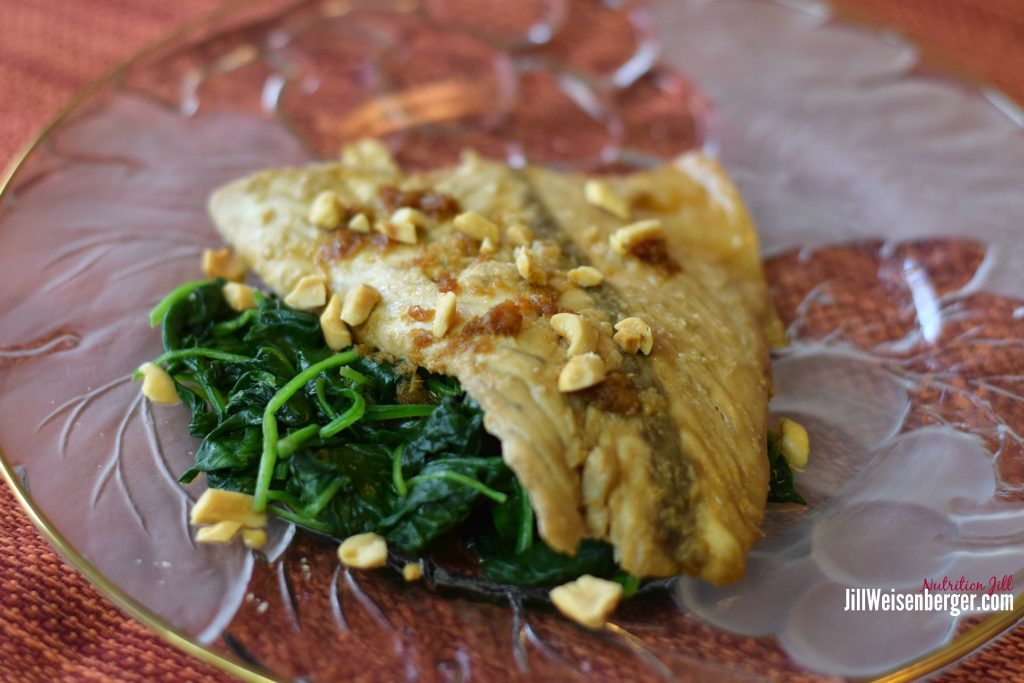
You’ll love this Asian-inspired barramundi with chopped peanuts. My family does.
Here are four easy ways to get more fish.
And here’s where you’ll find some of my favorite seafood recipes.
#2: Fortified foods: You’ll find a variety of foods with added omega-3 fatty acids. If you’re not a regular fish eater, hunt out those foods fortified, specifically with EPA or DHA. Fortified milk, eggs, and plant-based “seafood” products are just a few items on supermarket shelves.
#3: Supplements: If food doesn’t take you to your goal, supplements are an option. But it’s always smart to check in with your healthcare provider before starting supplements.
6 types of EPA + DHA supplements
You have a sea of options.
- Fish oil softgel supplements might come from a single source like Alaskan salmon or a mix of seafood such as anchovies, sardines, and tuna. Some might be specially coated to prevent “fish burps.” These are the ones I take because I hate fish burps after breakfast.
- Cod liver oil is an option for people who prefer a liquid. It’s plenty concentrated with lots of EPA + DHA, so you need just a small amount. The taste might turn you off though. Cod liver oil also contains vitamins A and D, which we need for good health but are also toxic in high quantities.
- Krill oil softgel supplements come from the tiny shrimp-like crustacean. They contain astaxanthin, the antioxidant that gives salmon its pink color, but the amount of EPA + DHA is negligible.
- Gummy supplements may be tasty, but they also have only tiny amounts of EPA + DHA.
- Omega-3 chews are as portable for travel as gummies but contain much more EPA + DHA. I tasted them at a sponsored meeting recently and did not like the texture.
- Algal oil softgel supplements are similar to fish oil softgels but are vegan.
Look for these on supplement labels
- the total amount of EPA + DHA, not the total amount of fish oil
- Fish oil is more than just EPA and DHA, so that amount will be larger. EPA + DHA are the necessary nutrients, so focus on that.
- serving size
- A bottle may show that a serving or dose contains 2000 mg of fish oil, but with careful review, you notice that it has only 500 mg EPA + DHA for 2 softgels or 250 mg per softgel.
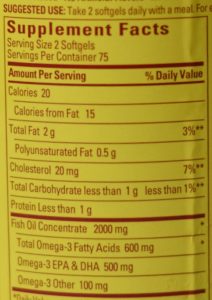
This label indicates that 2 softgels provide 2000 mg of fish oil. But notice that 2 softgels provide only 500 mg of EPA + DHA (250 mg of EPA + DHA per softgel)
For you nutrition history buffs:
Research looking at fish, omega-3 fatty acids, and heart health began in the 1970s. Omega-3 fatty acids grabbed the interest of scientists when they studied the diets and health of the Inuit of Greenland, who suffered heart attacks and diabetes at one-tenth the rate of people from Denmark. The Inuit’s high seafood intake fed them a lot of EPA and DHA – about 10.5 grams daily. The notion that these fatty acids protected the heart was further bolstered by observations that countries with high fish intakes had lower rates of heart disease. Plus Italian researchers ran a very large study (called GISSI) involving people who had recently suffered a heart attack. More than 11,000 people were randomized to receive either 840 mg EPA + DHA daily or a placebo. Among other positive findings, the researchers reported that supplementing with omega-3 fatty acids in this high-risk population, reduced the risk of sudden death by 45%.
There have been lots of studies since. Some have very positive findings, but other recent studies have been less enthusiastic. My take on why recent studies of omega-3 fatty acids are less promising is that we’re getting better healthcare these days. More people are meeting goals for blood pressure, blood sugar, and cholesterol than those enrolled in the GISSI study and other studies all those years ago. Plus, these days, plenty of people take life-saving statin drugs, which lower cholesterol levels, reduce inflammation, and prevent heart attacks.
Filed Under: Diabetes, Heart Health, Nutrition
Tagged: fats, fish, heart healthy, heart healthy fats, omega-3 fats

Jill Weisenberger
I'm Jill, and I believe simple changes in your mindset and health habits can bring life-changing rewards. And I don't believe in willpower. It's waaaay overrated. As a food-loving registered dietitian nutritionist, certified diabetes care and education specialist and certified health and wellness coach, I've helped thousands of people solve their food and nutrition problems. If you're looking for a better way to master this whole healthy eating/healthy living thing or if you're trying to prevent or manage diabetes or heart problems, you'll find plenty of resources right here.
Leave a Reply
5 Comments
Leave a Comment
Welcome to my Blog
Hi there! I'm Jill, a nutrition & diabetes expert and the author of 4 books.

I believe simple changes in health habits can bring you life-changing rewards.
And I believe willpower is way overrated.
Right here is where you can discover the mindset and habits to stick with healthy lifestyle choices most of the time - and drop the guilt when you don't.
Get the Second Edition!

Featured Posts




Wow! I finally get it. Those supplement labels are confusing. I thought I was getting more than I really am. Thanks for clearing that up!
So glad you found this post helpful!
This is a realistic and practical approach to increasing omegas in the diet. Thank you!
Love your articles: they come across in a useful way without additional and excessive information to plow througjh!
Aaaw, thanks!