
Here’s how to determine YOUR best diet to feel great and live well
Whether you want a prediabetes Mediterranean diet, a vegetarian diet to prevent heart disease or an omnivore’s diet to manage your diabetes, your best diet will have these characteristics.
You know how I know I’m a dietitian? One of the most common questions I’m asked is …
“What’s the best diet for – insert current problem?”
Whether it’s blood sugar control, high blood pressure, weight loss, or gut health – everyone’s looking for that one perfect eating plan.
After 3+ decades as a registered dietitian nutritionist, I’ve learned this question runs deeper than it appears. What we eat clearly matters – both for our long-term health and our day-to-day vitality. While nutrition science has plenty to say about diet (and believe me, I love diving into the research!), eating is also deeply personal, isn’t it?
Think about it: A meal either delights your taste buds or it doesn’t. It satisfies your hunger or leaves you wanting more. Some foods nourish our souls – like that comforting bowl of soup on a rough day or the aroma and warmth of my Tazo Wild Sweet Orange tea that I’m sipping right now to soothe my scratchy throat and stuffy nose.
And let’s not forget holiday foods! In my practice, I’ve seen how these cherished dishes connect us to our past, our families, and our traditions. All of these elements contribute to what makes a diet “best” for each of us.
The 2025 Best Diets Overall are …
… not very surprising.
For the past eight years, I’ve had the honor of serving on the US News & World Report expert panel, evaluating popular diets across various categories. Each October, I dive deep into the research behind more than three dozen diet plans, carefully weighing in on each one.
And you know what’s fascinating (but not at all surprising)? The same eating patterns consistently rise to the top – and it’s not just my opinion. When the scores from all the experts are combined, these diets shine for just about everything: blood sugar control, healthy eating, heart health, cancer prevention, and blood pressure management.
The top-ranking diets
Just FYI, even though I rate the diets, I don’t learn the results even a second earlier than you.

My kind of prediabetes Mediterranean diet
Photo credit: Brooke Lark
The Mediterranean Diet: a time-tested champion
The Mediterranean diet has maintained its #1 position for eight consecutive years, and here’s why I’m not surprised.
- An abundance of fabulous foods – delicious and health-boosting
- No food is off-limits
The Mediterranean diet is good for prediabetes
Research shows that folks who most closely follow a Mediterranean-style diet – regardless of where they live – are about 23% less likely to get type 2 diabetes. And the numbers are even better for anyone at high risk for heart disease or who has a previous history of gestational diabetes.
When people with overweight or obesity drop pounds, they also drop their risk of getting diabetes. But it’s possible to turn prediabetes around even without weight loss. A study in Spain found that people at high risk for heart disease cut their risk for diabetes in half when taught to follow a Mediterranean-style diet compared to a lower-fat diet.
Excellent results even without weight loss or extra exercise!
The Mediterranean diet is good for diabetes
A Mediterranean-style diet is a winner for type 2 diabetes too. Research shows it helps improve blood sugar control and sometimes helps people newly diagnosed achieve a diabetes remission.
Though this varies from person to person, my typical advice to people with diabetes who follow a Mediterranean diet is to count carbs for careful blood sugar control.
I typically don’t recommend carb counting for a prediabetes Mediterranean diet, yet this also varies from person to person. If you have prediabetes, you’re not at risk for the very high blood sugar levels someone with diabetes might have. This gives you even more opportunity to nourish yourself with disease-fighting, carb-rich foods.
The Mediterranean diet is good for your heart
The diet’s emphasis on olive oil, whole grains, and plant-based proteins helps manage cholesterol levels and blood pressure naturally.
Let’s look at some powerhouse foods that make this diet so effective:
Berries and citrus fruits: Berries are particularly linked to lower diabetes risk, possibly from their anthocyanidins. Citrus fruits also shine around the Mediterranean Sea. Their viscous fibers help level out your cholesterol levels.
- Whole grains: Barley and oats win the trophies for beta-glucan, a viscous fiber that sweeps cholesterol from your digestive tract and nudges your body to use insulin better, thus improving blood sugar levels. Other whole grains in Spain, Greece, Italy, Turkey, and other Mediterranean countries are polenta, farro, millet, and wheat berries.
- Pulses: From lentils to chickpeas, these foods provide crucial fibers and resistant starches that aid in blood sugar and cholesterol management.
- If you haven’t tried my Mediterranean Chickpea Salad yet, you haven’t tried the most popular recipe on my site. The most fun comment I got on social media about that recipe was from a woman saying she halved the recipe because she wasn’t sure she’d like it. But it was soooo good, she wished she had doubled it instead.
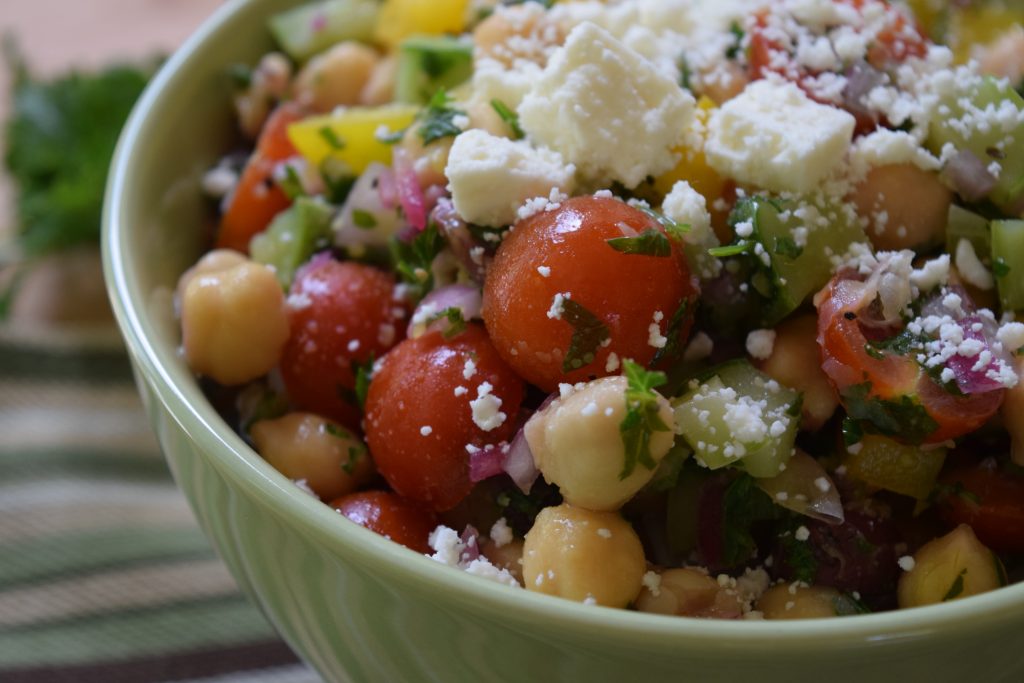
You’re going to like this Mediterranean Chickpea Salad recipe
- Non-starchy vegetables: Fill up on leafy greens, bell peppers, onion, carrots, eggplant, fennel, and every other non-starchy vegetable you can fit into your refrigerator. You know what’s so good about this category? There are a lot of non-starchy vegetables, so you’ll never get in a food rut. The more you eat of these low-calorie, low-carb nutrient treasure troves, the less your belly will scream for high-calorie, high-carb foods. Hands down, I can tell you that the more non-starchy vegetables I eat, the easier it is to manage my weight. And you can grab a printable non-starchy vegetables list here.
- Extra virgin olive oil: This isn’t just for flavor – replacing saturated fats with olive oil helps reduce LDL cholesterol and improve insulin sensitivity. When you replace foods high in saturated fats (like butter) with olive oil or other fats rich in monounsaturated fatty acids, you’re helping your body tamp down LDL cholesterol levels and become less insulin resistant. If premium olive oil is too pricey, give canola or peanut oil a try. They also have heart-healthy monounsaturated fats. But they don’t have the polyphenols and terpenoids that likely boost your antioxidant defenses and lower blood pressure.
- For all about olive oil and vegetable oils, head to the healthiest oil to cook with.
Research continues to support a Medieterranean-style eating pattern, linking it to reduced risks of type 2 diabetes, metabolic syndrome, heart attacks, stroke, and even dementia.
DASH: Science-Backed Success
The DASH diet (Dietary Approaches to Stop Hypertension) is particularly interesting because it’s backed by robust research suggesting benefits not just with blood pressure, but also for heart failure, overall cardiovascular risk reduction, and uric acid dysregulation. Studies support DASH for both prediabetes and diabetes, with nice improvements in insulin sensitivity.
DASH is centered around fruits, vegetables, low-fat or nonfat dairy, whole grains, poultry, legumes, and nuts. It’s low in sodium, added sugars, and saturated fats. DASH differs from a traditional Mediterranean-style diet by being much lower in fat and richer in dairy products.
Yogurt might be part of the blood sugar benefit. Research suggests that eating yogurt helps prevent type 2 diabetes, so I love recommending it for people with prediabetes. An increase of one serving of yogurt a day is associated with an 18% lower risk of developing diabetes.
DASH is more prescriptive than a Mediterranean-style diet because it was developed with human intervention studies. On the other hand, the Mediterranean diets came about through observations in various Mediterranean countries instead of rigorous research protocols. To assess the flexibility of DASH, researchers tested three variations in the groundbreaking OmniHeart trial. This study revealed some fascinating findings about variations of the DASH diet:
- Replacing some carbohydrates with either protein (especially plant protein) or unsaturated fats can enhance cardiovascular benefits
- The unsaturated fat version improved HDL cholesterol levels and insulin sensitivity
- Both protein and unsaturated fat variations significantly lowered blood pressure in people with hypertension.
Bottom line on DASH and OmniHeart: there’s more flexibility to the DASH eating plan than is first obvious.

This berry and Greek yogurt smoothie is a winner!
The Flexitarian Approach: plant-forward flexibility
The Flexitarian diet offers practicality and flexibility – it’s plant-based but not restrictive. This approach acknowledges that you don’t have to be strictly vegetarian to reap the health benefits of a plant-rich diet. It’s a particularly appealing option for those wanting to reduce meat consumption and other animal products without eliminating it entirely.
Maybe you crave your mom’s special beef Wellington every year at Christmas or you love chicken Parmesan at the Italian place in town. There’s room for both when you eat flexitarian.
As far as using DASH or the flexitarian diet for diabetes management, I typically suggest carb counting just as I do for a Mediterranean diet.
What about low-carb diets?
The US News and World Report expert panel rated low-carb diets highly for fast weight loss – not for sustainable weight loss. While they do help lots of people lose weight and dial down blood sugar levels, they miss the most important part of what I think is a healthy diet:
- focus on wholesome, health-boosting foods
Low-carb cupcakes aren’t any more nutritious than regular cupcakes or fat-free cupcakes.

Photo credit: Priscilla Du Preez
When you skimp on healthy carb-containing foods like fruits, grains, yogurt, starchy vegetables, and beans, you rob your body of the unique nutrition they provide – including all the defenders of heart disease, diabetes, and cancer.
Finding Your Best Diet
After years of working with clients from all walks of life, I’ve developed these practical strategies that actually work in the real world. Let me walk you through them:
-
Start with Plants (But make it easy!)
- Fill half your plate with vegetables at main meals. I know this sounds daunting, but here’s my trick: start with the vegetables you already enjoy. Love roasted broccoli? Make extra and keep it ready for your next meal. Can’t resist a good salad? Keep pre-washed greens on hand.
- Work toward the new recommendation of 2.5 cups of legumes weekly. In my experience, the easiest way to do this is to start with just one additional bean recipe per week. Try adding chickpeas to your salad or black beans to your tacos. One of my clients started by simply adding lentils to her usual soup recipe – now it’s in her usual rotation.
- Keep fresh fruit visible and easily accessible. I learned this trick years ago: what we see first in the fridge or on the counter is what we’re most likely to eat. I keep a beautiful bowl of fruit on my kitchen counter, and yes, it really works!
-
Focus on Quality Over Restrictions (Because life’s too short)
- Choose whole and minimally-processed foods instead of overly-processed alternatives, but be realistic. I tell my clients: you don’t have to make everything from scratch! A frozen stir-fry mix with a chicken or fish can be just as nutritious as a meal that took hours to prepare.
- Don’t completely ban foods you love – practice moderation. In my 30+ years of practice, I’ve never seen a sustainable diet built on deprivation. Love chocolate, like I do? Keep it in your life! Just work on mindful portions and really savor it.
- Pay attention to how different foods make you feel. You’d be amazed at what patterns emerge when you start paying attention.
-
Make Gradual Changes (This is your journey)
- Start by adding healthy foods rather than eliminating “bad” ones. I’ve seen this work time and time again: focus on including more good stuff, and the less healthy choices naturally get crowded out.
- Pick one meal to improve each week. Maybe it’s breakfast – could you add some berries to your usual toast? Or perhaps it’s dinner – could you try a new vegetable recipe? Small steps lead to lasting change.
- Experiment with new recipes featuring pulses and vegetables. I always suggest starting with familiar flavors. Love Mexican food? Try a bean and sweet potato taco filling. Fan of Italian? Lentils work beautifully in pasta sauce.
-
Personalize Your Approach (Because you’re unique)
- Combine elements from different healthy eating patterns. Create a list of your favorite foods from various eating patterns and start collecting recipes and wholesome prepared foods. Focus on satisfaction and learn to listen to your body’s hunger cues and energy levels.
- Honor your cultural food traditions. Some of the healthiest dishes I know come from various cultural backgrounds. Whether it’s your grandmother’s lentil soup or your aunt’s vegetable curry, traditional wisdom often aligns beautifully with nutrition science.
- Consider your lifestyle, schedule, and cooking abilities. Be honest about what you can and want to do. Working late? Maybe that’s when you rely on healthy frozen meals. Love to cook? Weekend meal prep might be your thing.
So many ways to a healthy diet
Whether you choose Mediterranean-style, vegan, pescatarian, DASH, flexitarian, or anything else, here’s what must be in a “best diet.”
- You like it and can stick with it
- You eat an abundance of foods that nourish your body
- Your meals and snacks energize you
- You feel great after eating
- You don’t feel deprived or punished because you find a sensible way to fit in your favorites
Check all these boxes, and you’ve probably found your best diet.
Another common question that proves I’m a dietitian
“What diet do you follow?”
Truth? I call it globally-influenced Mediterranean style. Why? Because while I embrace Mediterranean principles – more plants than animals, plenty of fish, vegetables, fruits, whole grains, and pulses daily – I love exploring foods from around the world. Some of my favorite dishes come from Norway, India, Puerto Rico, and Thailand. This approach allows me to enjoy the health benefits of Mediterranean-style eating while satisfying my love for culinary adventure.
Filed Under: Diabetes, Healthy Brain, Heart Health, Prediabetes
Tagged: DASH diet, Flexitarian Diet, Mediterranean diet, blood sugar, fiber, fruit, heart healthy, legumes

Jill Weisenberger
I'm Jill, and I believe simple changes in your mindset and health habits can bring life-changing rewards. And I don't believe in willpower. It's waaaay overrated. As a food-loving registered dietitian nutritionist, certified diabetes care and education specialist and certified health and wellness coach, I've helped thousands of people solve their food and nutrition problems. If you're looking for a better way to master this whole healthy eating/healthy living thing or if you're trying to prevent or manage diabetes or heart problems, you'll find plenty of resources right here.
Leave a Reply
2 Comments
Leave a Comment
Welcome to my Blog
Hi there! I'm Jill, a nutrition & diabetes expert and the author of 4 books.

I believe simple changes in health habits can bring you life-changing rewards.
And I believe willpower is way overrated.
Right here is where you can discover the mindset and habits to stick with healthy lifestyle choices most of the time - and drop the guilt when you don't.
Get the Second Edition!

Featured Posts


Hi Jill! I always love your interesting articles. I too love to try foods from around the world. I’d love to see recipes that are veg forward that I can make for lunch. I seem to do ok with dinners but lunches are always harder if I don’t want salad everyday. Thanks for all you do to make eating healthier so accessible. It really helps me!
Thank you for such a thoughtful and comprehensive guide! Your focus on balance, personalization, and sustainability really resonates. I love how you highlight the joy of eating while respecting individual needs and cultural traditions. It’s a refreshing, encouraging approach to health that feels attainable and empowering.