

Non-starchy vegetables are the boss of all super foods & here’s why
Inside: Find the ultimate non-starchy vegetables list, so you can manage your weight, blood sugar, blood pressure, and overall health and well-being.
What if you could manage your weight and your blood sugar – and your cholesterol and blood pressure too – without ever being uncomfortably hungry?
Let me tell you how I do it.
I’m only halfway jesting when I say my number 1 strategy to manage my weight and my health is to shovel non-starchy vegetables down my throat. Eating them tames my hunger and fills my belly enough that I can pass up second helpings of pasta, potatoes, and pie. It is my primary strategy to manage my weight.
But I don’t use a shovel and I do chew thoroughly.
7 reasons to eat more non-starchy vegetables
Low in calories
For a mere 100 calories, you can devour 2 cups of most cooked non-starchy vegetables or 4 cups of raw non-starchy vegetables. But starchy vegetables like corn, potatoes, and peas serve up about 160 calories per cup.
- 1 cup cooked broccoli (plain) = about 50 calories
- 1 cup cooked potato (plain) = about 160 calories
Potatoes and other starchy vegetables pack nutrition and taste, so don’t fear them. But do pay attention to the full factor you get from 100 calories of non-starchy vegetables like broccoli, spinach, carrots, and tomatoes compared to the much skimpier portion of 100 calories of corn, green peas, or potatoes.
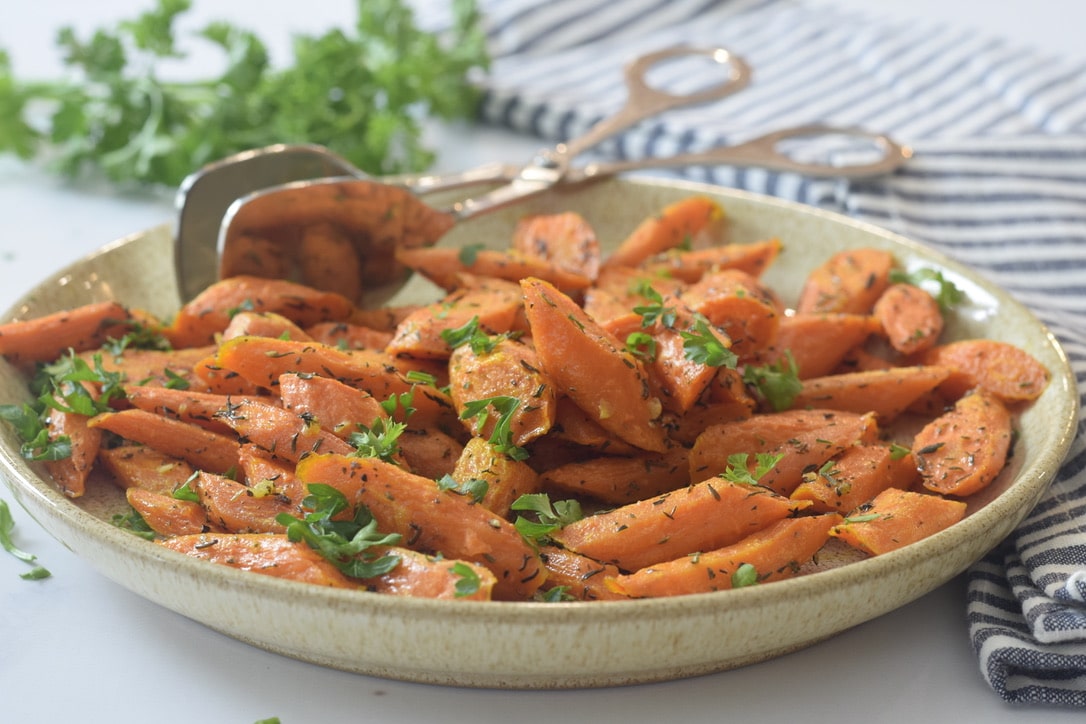
These are gorgeous AND delicious!
On the other hand, if you struggle to keep weight on, larger portions of starchy vegetables might be a good thing.
Low in carbohydrates
Non-starchy vegetables are low in calories because they’re low in carbohydrates, which helps anyone with diabetes or prediabetes. Carbs – even from necessary, wholesome foods like veggies – raise blood sugar. The key to blood sugar management is not to avoid carbs, but to choose them wisely and eat moderate amounts.
Here’s a list of starchy vegetables that are good for you in smaller portions.
And that’s easier when you eat many more non-starchy vegetables than starchy ones. On average, a 1/2-cup serving of cooked non-starchy vegetables like carrots, zucchini, and asparagus drops about 5 grams of carbohydrates. But sweet potato or winter squash leaves you with about 3 times the carbs in non-starchy veggies or about 15 grams in a 1/2-cup serving.
- 1 cup raw leafy greens (plain) = about 5 grams of carbohydrate
- 1 cup cooked bell peppers and onions (plain) = about 10 grams of carbohydrate
- 1 cup cooked corn (plain) = about 30 grams of carbohydrate
Fiber!
Fiber is a type of carbohydrate and comes only from plants. And there’s a better-than-average chance that you don’t get enough. The Adequate Intake for adults ranges from 21 to 38 grams, depending on age and sex. But only 5% of Americans consume enough fiber, which is needed for all of these:
- blood sugar management
- help in the bathroom
- cholesterol lowering
- weight management
- gut health
- cancer prevention
- and more
Each food on my non-starchy vegetables list below contains fiber. A few with more than 3 grams per 1/2 cup cooked vegetables are Brussels sprouts, carrots, chayote, peppers, and Swiss chard. But if you do like I do, and eat heaps of veggies all day long, they’ll quickly bump you along on your goal of 21 to 38 grams daily.
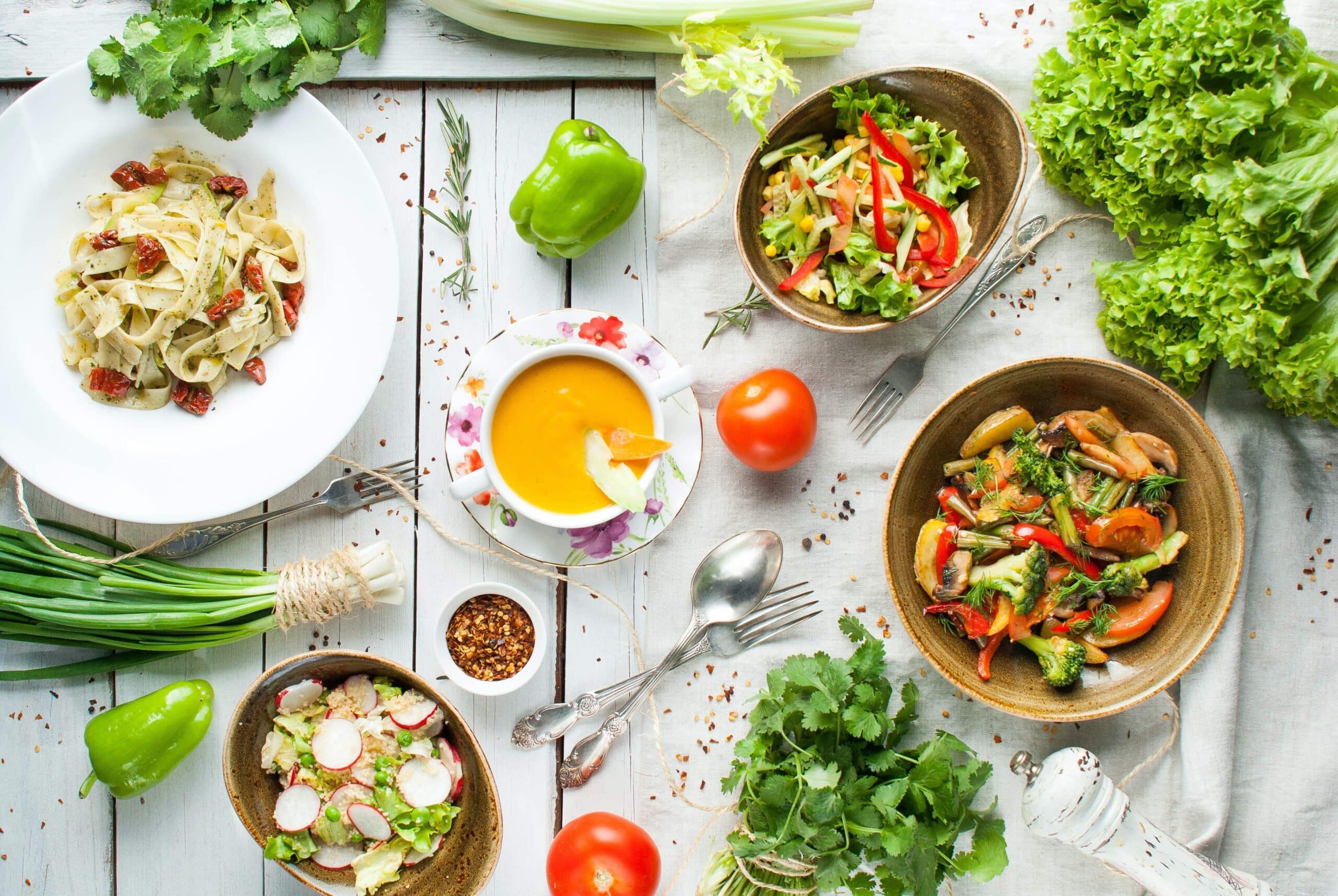
Photo credit: Victoria Shes
Boost your brain health
Non-starchy vegetables are loaded with brain-healthy nutrients like vitamin K, folate, and carotenoids. Green leafy vegetables, in particular, are part of the MIND Diet, an eating plan devised to prevent dementia.
I want to highlight two carotenoids: lutein and zeaxanthin. These two compounds are cousins to beta-carotene. But unlike beta-carotene, lutein and zeaxanthin cross over the blood-brain barrier and deposit into the brain. Studies suggest that higher levels in the brain protect against cognitive decline with aging.
Find lutein and zeaxanthin in spinach, kale, collard greens, broccoli, zucchini, Brussels sprouts, and bell peppers.
Protect your eyes
Thank lutein and zeaxanthin for shielding your vision too. They’re the only carotenoids to make their way into the macula of the eye, where they’re present in high concentrations. Light, constantly bearing down on the macula, makes us vulnerable to age-related macular degeneration – the number 1 cause of blindness and severe vision loss in adults aged 60 and older. But lutein and zeaxanthin both filter the light and act as antioxidants, protecting your eyes from damage.
Lower your blood pressure
While sodium boosts blood pressure, potassium weakens sodium’s effect. And where do you get potassium? Lots of foods, especially fruits and vegetables! You’ll find this blood pressure-friendly mineral in spinach, kohlrabi, carrots, broccoli, beet greens, mushrooms, tomatoes, Swiss chard, and oodles of other foods.
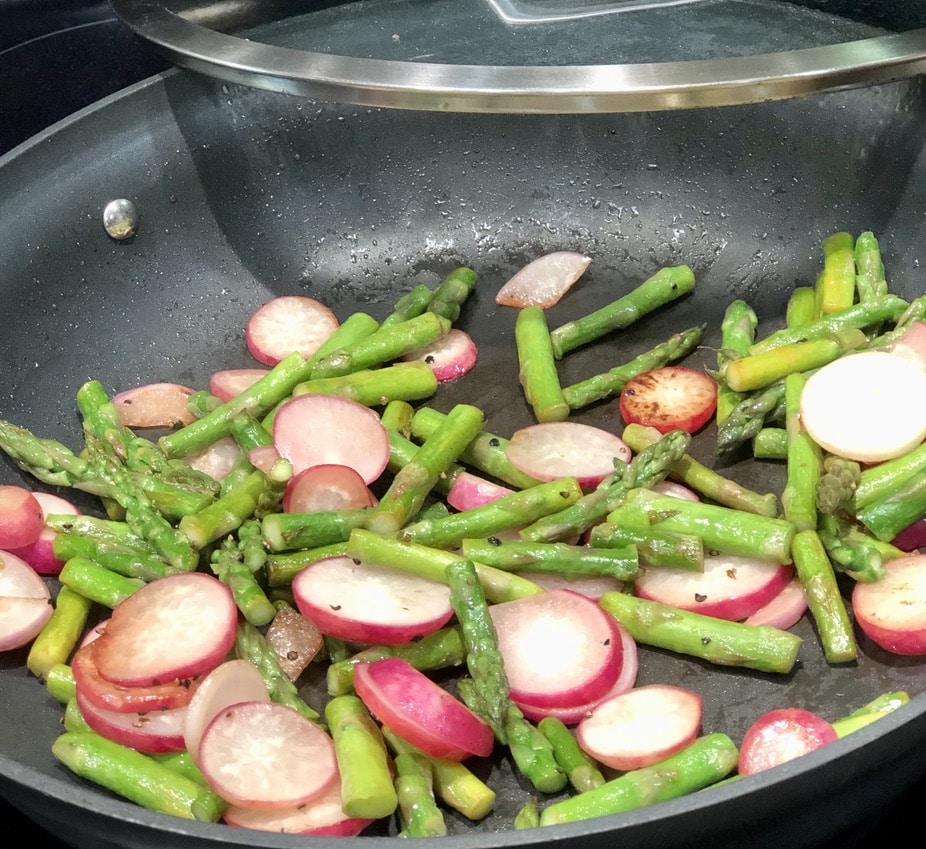
Get creative with the choices on the non-starchy vegetables list. These asparagus and radishes are surprisingly awesome!
Tamp down inflammation and oxidation
When you eat an abundance and variety of vegetables, you bathe your cells in an abundance and variety of phytonutrients with anti-inflammatory and antioxidant talents.
Low levels of chronic inflammation, which is related to diet and other lifestyle habits, is linked to heart disease, type 2 diabetes, Alzheimer’s disease, and many types of cancer. Inflammation causes plaque buildup in your blood vessels and can cause that plaque to rupture, leading to a heart attack. Over time, chronic inflammation generates free radicals that damage your cells’ DNA, an early step in cancer development. And chronic inflammation is linked to insulin resistance, which causes high blood sugar levels and can keep them elevated in the prediabetes or diabetes range.
The anti-inflammatory and antioxidant compounds in veggies make them downright good for you.
The Ultimate Non-Starchy Vegetables List
How many choices on this list of non-starchy vegetables do you eat regularly? Eat a variety for the greatest health boost. Check out an earlier article for tips to eat more veggies with convenience foods.
| Artichoke and artichoke hearts | Eggplant | Peppers |
| Asparagus | Fennel | Radishes |
| Bamboo shoots | Gourds (bitter melon, chayote, luffa) | Rutabaga |
| Beans (green beans and wax beans) | Greens (collards, dandelion, mustard, purslane, turnip) | Spinach |
| Beets | Heart of palm | Sugar snap peas |
| Broccoli | Jicama | Summer squash (yellow, pattypan, zucchini) |
| Brussels sprouts | Kale | Swiss chard |
| Cabbage (green, red, bok choy) | Kohlrabi | Tomatoes |
| Carrots | Lettuce and salad greens (arugula, butterhead, endive, frisee, radicchio, romaine, mache, iceberg, escarole, looseleaf) | Turnips |
| Cauliflower | Mushrooms (white, cremini, oyster, portabello, shiitake, enoki) | Water chestnuts |
| Celery | Okra | Yard-long beans |
| Cucumber | Onions (red, white, yellow, leeks, scallions) | |
| Daikon | Pea pods |
What you should do now
First, familiarize yourself with the non-starchy vegetables list. Then start eating them. A lot.
- Aim to fill half your plate with non-starchy vegetables at lunch and dinner.
- Eat every color and every type. Take a look at the infographic on this article about healthy foods for blood pressure.
- Eat non-starchy vegetables throughout the day. If you wait until dinner, you’ll have to sit at the table for a long time and tire out your jaw to get enough.
- Try a new vegetable or a new vegetable recipe a couple times each month.
Cheers to enjoying your healthy meals – no shovel needed!
Filed Under: Success strategies, Weight Loss
Tagged: Vegetables, blood sugar, carbohydrate, weight loss, willpower

Jill Weisenberger
I'm Jill, and I believe simple changes in your mindset and health habits can bring life-changing rewards. And I don't believe in willpower. It's waaaay overrated. As a food-loving registered dietitian nutritionist, certified diabetes care and education specialist and certified health and wellness coach, I've helped thousands of people solve their food and nutrition problems. If you're looking for a better way to master this whole healthy eating/healthy living thing or if you're trying to prevent or manage diabetes or heart problems, you'll find plenty of resources right here.
Leave a Reply
7 Comments
Leave a Comment
Welcome to my Blog
Hi there! I'm Jill, a nutrition & diabetes expert and the author of 4 books.

I believe simple changes in health habits can bring you life-changing rewards.
And I believe willpower is way overrated.
Right here is where you can discover the mindset and habits to stick with healthy lifestyle choices most of the time - and drop the guilt when you don't.
Get the Second Edition!

Featured Posts



Jill I look so forward to your weekly emails. I learn something new from each one. Please don’t stop. My husband has Type 2 Diabetes and is a meat and potatoes kind of guy and loves sweets and salt. He is 81 years old so it is always a challenge to fix food that is healthy and that he will eat This is where your emails come in. Thank you so much.
Big smile on my face Thank you Kathy!
I love your book(s), and I have learned so much from your website… thank you. I know there’s an article on how many carbs are recommended daily, but cannot find it – direct me. Carbs and baking are my downfall. After 45 yrs of being a full-time oncology nurse, – I finally retired, and now the focus is on my health.
I am pre-diabetic, recent A1C 5.7, appt scheduled with primary provider (end of November) – I know I can make a lot of changes by then. (For carb counting – I am a female, 65 yrs old, 5’3″, 184 lbs), thanks.
Hi Sharon, thanks for your nice note. I generally recommend carb allowances for people with diabetes, but not so much for people with prediabetes because, with prediabetes, you’re not at risk for a dangerously high blood sugar level and because the healthy carb-rich foods like black beans, fruit and others offer compounds that can improve insulin resistance and other problems. However, I don’t encourage outrageous amounts of carbs either. Balance rules. I recommend the very simple plate method. Check here and here.
I just had wight loss surgery done on February 9th 2023. I have pre-diabetes.
I look forward to adjusting my decent eating habits to more beneficial and healthier eating habits.
Wonderful! My best advice: focus on how great it makes you feel, both mentally and physically.