

Does This Food or That One Belong on Your Anti-inflammatory Grocery List?
Here’s the anti-inflammatory grocery list to make healthy eating easier.
My new client clutched a plastic bag I guessed held supplements.
First, she pulled out a bottle of green smoothie and placed it on my desk. She was excited to show me her virtuous daily breakfast. But she confessed it tasted “nasty.”

Next came a probiotic, omega-3-6-9 supplement, resveratrol, vitamin C and about half a dozen others I can’t recall. A few I had never heard of. She expected each supplement to help with inflammation.
Her goal in seeing me? She wanted an anti-inflammatory grocery list to ease her arthritis pain and to avoid heart disease and type 2 diabetes.
The good and bad about inflammation
Without an inflammatory response, you wouldn’t heal after cutting your hand with a kitchen knife or stepping on a broken shell while strolling barefoot on the beach. With as many nicks and pricks as I’ve had, I would have succumbed to infection long ago if it were not for my robust immune system. You too, of course. Acute inflammation is generally good, and it keeps us alive.
To fight infection, your highly complex immune system increases blood flow to the injured area and delivers white blood cells and other compounds miraculously designed to attack the foreign invader (microbes, viruses and the like), and help you heal. The injured tissue grows red, warm and swollen. Once the threat is gone, the inflammatory response goes too.
But the bad side of inflammation is chronic inflammation, which is persistent 24/7 even when you have no immediate threat. And you won’t see red, swollen or warm areas. Chronic inflammation is invisible. When your immune system is chronically activated, low levels of inflammation damage your blood vessels and other parts of your body.
Chronic inflammation is linked to heart disease, type 2 diabetes, Alzheimer’s disease, and many types of cancer. Inflammation can cause both plaque buildup in the blood vessels and the rupture of plaque, which can cause a heart attack. Over the years, chronic inflammation can cause free radicals to damage your cells’ DNA, an early step in cancer development. And you get a double whammy with type 2 diabetes. Chronic inflammation is linked to insulin resistance, which causes high blood sugar levels. And high blood sugar can cause more inflammation.
The goal to avoid chronic inflammation is a good one. Thus, my client’s request for an anti-inflammatory grocery list.

Nearly all fruits, vegetables and herbs belong in an anti-inflammatory diet. Photo credit: Shelley Pauls
How do you measure an invisible problem?
A blood test can help you see the problem.
Doctors order a test for hsCRP, high-sensitivity C-reactive protein, to look for chronic inflammation. (Another test CRP or “regular CRP” is not sensitive enough to detect low levels of chronic inflammation. It’s useful, however, in monitoring inflammatory diseases like Crohn’s disease and rheumatoid arthritis.)
A low number, such as less than 1 mg/L, is ideal. A number greater than 3 mg/L indicates a high risk for chronic inflammation and heart disease, though a high hsCRP may also suggest acute inflammation from a short-term infection.
What to put on your anti-inflammatory grocery list?
Watch out! Headlines are confusing, misleading and sometimes downright wrong.
I clenched my teeth when I saw a headline promoting the powers of shiitake mushrooms. I love mushrooms for their umami flavor, nutrition and low calories. But I’m not going to eat them daily because a sloppily written article on the web reports they have anti-inflammatory properties – especially when I see the study involved mice, not people.
No single food will make or break your anti-inflammatory diet. You can build a delicious, satisfying anti-inflammatory grocery list whether you follow a Mediterranean-style diet, the DASH diet, a vegan diet or any other balanced eating pattern.

Watermelon packs a bunch of carotenoids and other antioxidants and health-boosting compounds. Smile and enjoy! Photo credit: Hana Lopez
Some keys to your anti-inflammatory diet before we get to the grocery list:
- Focus on fiber-rich foods. Some fibers feed the healthy gut bacteria that produce anti-inflammatory compounds or release anti-inflammatory compounds from your food.
- Eat plant slant. Plants are where you get fiber, but they are so much more than that. Each of our fruits, vegetables, spices, nuts, whole grains, beans and other plant foods gives the body a unique array of nutrients and phytonutrients, many of which fight inflammation and stop the damage of free radicals.
- Find omega-3 fats. Your body converts the marine (fish and algae) omega-3 fats into needed anti-inflammatory compounds. Specifically, I’m referring to two omega-3 fatty acids: EPA and DHA. Here’s a primer on omega-3 fatty acids and supplements.
Specific foods to include on an anti-inflammatory shopping list.
In general, we’re looking for prebiotic fibers, resistant starches, omega-3 fatty acids, antioxidants and anti-inflammatory phytonutrients. The following is not an exhaustive list. Nearly every fruit, vegetable, whole grain, nut, seed, bean, and fish belongs on the list.
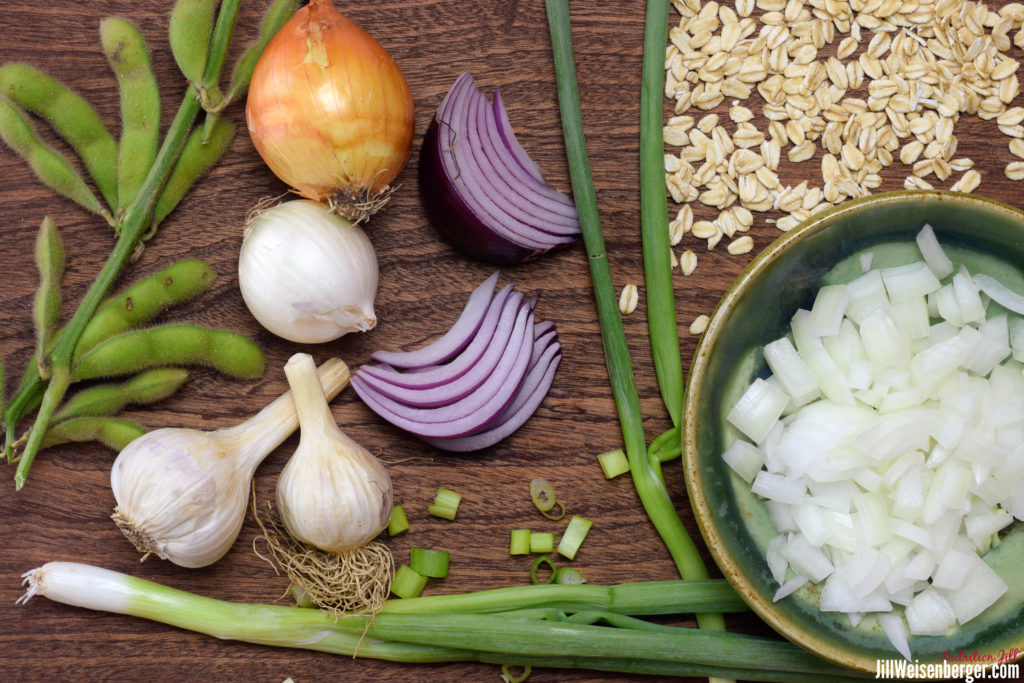
These are all sources of prebiotics. Put them on your anti-inflammatory grocery list.
Choose fruits and vegetables of every color, including white and brown.
- Berries, including blueberries, strawberries, blackberries and raspberries
- Apples and pears
- Citrus fruits
- Stone fruits like peaches and apricots
- Melons
- Other fruits including grapes, kiwi, mangoes and pineapple
- Cruciferous vegetables: broccoli, cabbage, cauliflower, kale, radishes and turnips
- Pro tip: find out how to get the most nutrients from your cruciferous vegetables.
- Leafy greens such as arugula, spinach, chard and kale
- Tomatoes, carrots, sweet potatoes, and other red/orange vegetables with antioxidant carotenoids.
- Nuts and seeds
- Pulses (beans, peas and lentils) and other sources of resistant starches
- Extra virgin olive oil
- Whole grains like oats, barley, and quinoa
- Herbs and spices: both fresh and dried are good choices
- Coffee
- Tea

Tea without sugar is a great, healthy choice/ photo credit: © Can Stock Photo / fahrwasser
- Foods with prebiotics, including asparagus, sunchokes, whole wheat, onions, garlic and foods made with chicory root (also called inulin)
- Seafood rich in omega-3 fatty acids, including salmon, arctic char, herring, tuna, Atlantic mackerel, sardines and barramundi (If you do not consume animal products, consider a DHA supplement made from algae.)
- Here are a few of my favorite healthy fish recipes.
Other ways to fight chronic inflammation
Filling up on anti-inflammatory foods isn’t the only weapon against chronic inflammation. Pay attention to these strategies too.
- Limit sugary beverages, baked goods, fried foods and excessive animal protein.
- Move daily.
- Avoid tobacco
- Manage your blood sugar levels
- Aim to lose 5 – 10% of your weight if you have overweight or obesity. Read the truth about weight loss.
One thing you don’t see on my anti-inflammatory grocery list is a nasty-tasting green smoothie. Food is supposed to taste good, you guys! And besides, a smoothie is not a special way to get nutrition. If you like smoothies, enjoy them. If not, get your greens and fruits in a more chewable way.
I also don’t recommend many supplements. Inside that plastic bag, my client’s nutrition plan was so complicated, expensive and unnecessary.
Eating healthy food you enjoy is your best plan of attack.
Filed Under: Myth Busting, Science of Healthy
Tagged: anti-inflammatory diet, cancer prevention, diabetes prevention, free radicals, heart healthy, omega-3 fats, phytonutrients, prediabetes

Jill Weisenberger
I'm Jill, and I believe simple changes in your mindset and health habits can bring life-changing rewards. And I don't believe in willpower. It's waaaay overrated. As a food-loving registered dietitian nutritionist, certified diabetes care and education specialist and certified health and wellness coach, I've helped thousands of people solve their food and nutrition problems. If you're looking for a better way to master this whole healthy eating/healthy living thing or if you're trying to prevent or manage diabetes or heart problems, you'll find plenty of resources right here.
Leave a Reply
2 Comments
Leave a Comment
Welcome to my Blog
Hi there! I'm Jill, a nutrition & diabetes expert and the author of 4 books.

I believe simple changes in health habits can bring you life-changing rewards.
And I believe willpower is way overrated.
Right here is where you can discover the mindset and habits to stick with healthy lifestyle choices most of the time - and drop the guilt when you don't.
Get the Second Edition!

Featured Posts



Jill,
I am reading your information on line and have a question. I am 89 years old and my Dr just did lab my A1c came back 5.7 it has Always been normal back then said he didn’t think I would ever have diabetes and then this test is I point to make it pre diabetic. I have for the last 3 months been eating ice cream and choc pudding at night.
Could this make the test show pre diabetic. Also had heart attack in January. I hav oatmeal and slice of toast breakfast. Lunch I try to eat vegetables and banana I really don’t have appetite I usually eat about tablespoonful of each vegetable and mall Aunt meat. I now bought no sugar ice cream hoping it will g back to normal.
Thanks for reaching out Ruth. I can answer your questions in only a very general way since I don’t know you personally. Insulin resistance, thus prediabetes and type 2 diabetes, increase with each birthday. Being 89 and having an A1C at the low end of the prediabetes range is way, way better than average. Also, it’s unlikely that a single food could make your average blood sugar level go beyond the normal range. More likely, it’s a function of aging and overall lifestyle habits. My general recommendation is to follow basic healthy lifestyle habits instead of focusing specifically on your blood sugar levels. This post will give you a good start on what habits to aim for. Of course, talk with your own healthcare provider.
As far as sugar-free ice cream goes, I’m typically not impressed with the nutrition facts, but I suppose there may be some good ones. Often they are high in saturated fat (bad for the heart), just as high in calories as other ice creams, and the total carbohydrate may be high or low. If you want specific meal ideas, I’d suggest asking your primary care provider for a referral to a registered dietitian nutritionist (RDN). An RDN can help you come up with a plan specific to your unique needs.