

Calorie myths you need to ignore to stay healthy and sane
Inside: Once you have the facts about these 7 calorie myths, you’ll know what to focus on and what to ignore when it comes to your weight and health.
In college, I measured carrots with a ruler to get a more accurate calorie count. 😳
I’ve come a long way, thank goodness, since spending most of my teen years and into my early 20s counting, cutting, and calculating calories.
Today I know that calories count, but I don’t have to count calories.
I know that a calorie is a calorie is a calorie – but only sort of. I’ll explain more below in Calorie Myth #1.
I know that even though talking about calories can ramp up negative emotions, calories are neither good nor bad.
And I know if you’re calorie aware, you can better manage your weight – whether you want to lose, gain, or maintain your current weight.
But even savvy folks are fooled by calorie myths. So today, I’ll clear up the confusion about calories by busting 7 calorie myths.
Calorie Confusion
You can’t see, touch, smell, taste, or hear a calorie. And that may be why calories are confusing. They are abstract.

You can’t see, touch, smell, taste, or hear a calorie.
Photo credit: Jason Sung
The technical definition of a calorie means very little to most people.
A calorie is the amount of energy needed to raise the temperature of 1 gram of water by 1 degree Celsius.
That doesn’t feel relevant to most of us, I’m sure. In real-life terms, calories are the amount of potential energy stored in food. A calorie is a unit of energy. That’s all. It’s neither good nor bad any more than a foot or an inch or a milliliter is good or bad.
Calories fuel your body for everything from lugging heavy boxes up the stairs to cuddling your pet to breathing. The amount of calories your body uses depends on soooo many factors, including these:
- weight
- body composition
- activity level
- hormone status
- medications
- health status
The calorie myths you’ve got to ignore
Buying into calorie myths can make you obsessive – like when I took a ruler to my carrots. It can crash your self-confidence when your weight doesn’t change as you expect it to. And it can lead you to put your efforts and energy into the little things that matter little and away from the big things that matter a lot.
Calorie myth #1: All calories are equal
Yes and no.
It’s true that it makes no difference where the calories come from for you to gain or lose weight. If you eat all of your calories from chicken, corn, and candy or from burgers, broccoli, and Brussels sprouts, you’ll gain weight if you eat more calories than your body uses and you’ll lose weight if your total calorie intake is below what your body uses. In fact, we’ve seen accounts of both weight gain and weight loss on an all-McDonald’s diet.
The all-calories-are-equal myth is false in at least three ways.
- The quality of your food hugely impacts your health, energy, mood, and overall well-being. You can expect more pep in your step from a 150-calorie snack of yogurt and fruit, for example, than you can from 150 calories of Skittles.
- Let’s say you ate a 500-calorie meal of just pasta and garlic oil. Compare that to a 500-calorie balanced meal of pasta, veggies, grilled shrimp, and garlic oil. Which one will help you stay full longer? If you’re like many, you’ll eat more calories at your next snack or meal after the pasta-only lunch. So maybe the 500 calories in those 2 lunches aren’t equal after all.
- Finally, food labels and calorie charts identify the potential amount of calories in food – the most calories that can be extracted. But we often don’t extract all the calories from food. There are differences among foods. For example, a food label shows that 32 grams of almond butter provide 190 calories. Same for 32 grams of whole almonds. But scientists have found that people generally extract fewer calories from whole almonds because they enter the colon partially undigested. However, almond butter, which enters your mouth already pulverized, is more easily digested and absorbed. There are also differences among people. Because of my unique physiology and the makeup of my gut microbiome, I may extract more or fewer calories from a particular meal than you might.
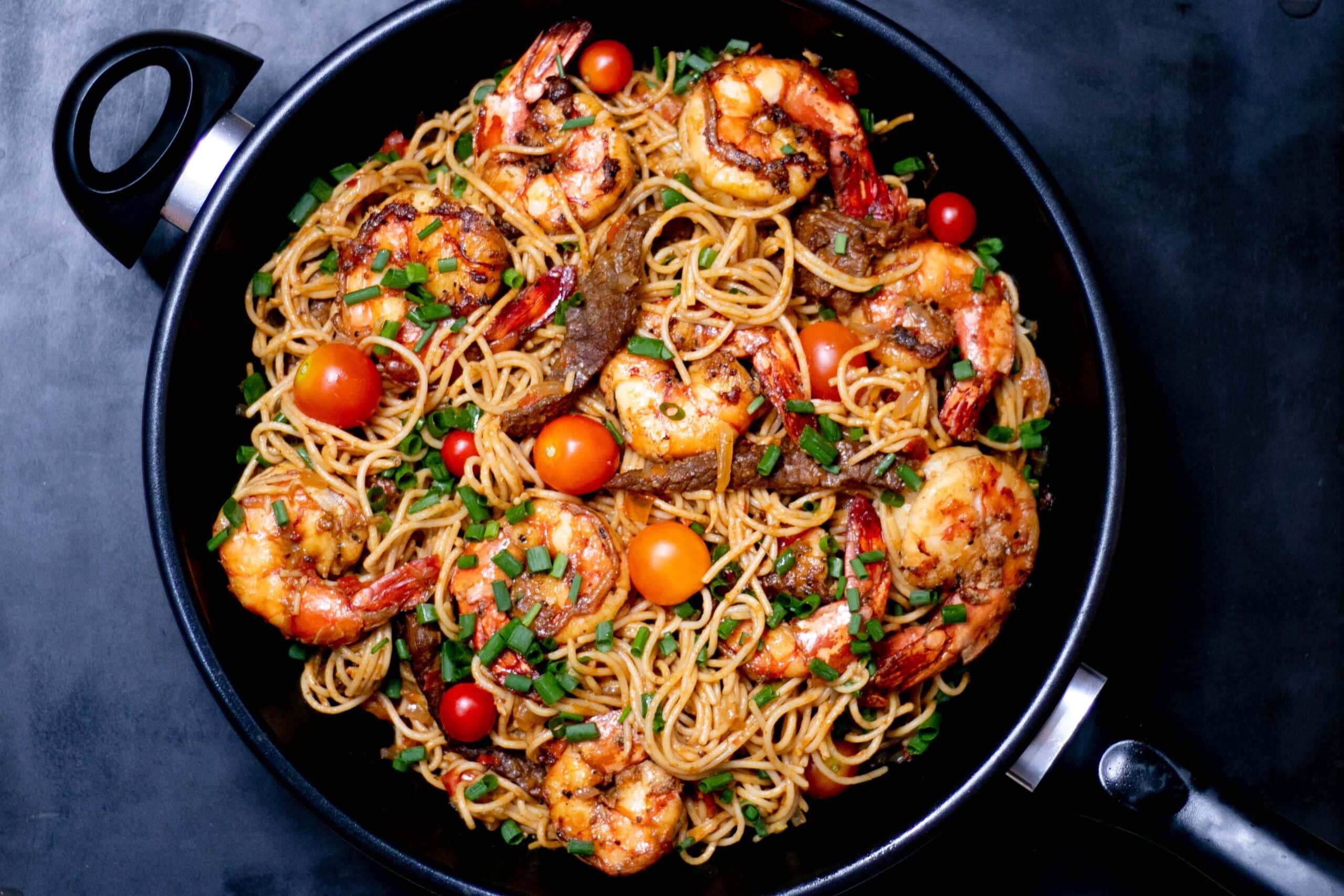
Photo credit: Olayinka Babalola
My clients and students with diabetes or prediabetes often struggle with carbs or carbohydrate myths, as well as calorie myths. They wonder: Is a carb is a carb is a carb? Again, the answer is yes, but only sort of. For more about carbs, read Your Questions about Carbohydrates Answered.
Calorie myth #2: Some foods have negative calories
Simply not true.
It doesn’t matter how many celery stalks you eat, you will not go into a calorie deficit from chewing, digesting, and absorbing the nutrients in your stalks. Digestion and absorption typically demand about 10% of a food’s calories, so that still leaves you 90% – or close to it – to absorb and make use of.
Calorie myth #3: Eating frequently burns more calories
I’ve covered this myth before in my articles about metabolic boosters and snacking.
Here’s the super short explanation:
As mentioned above, your body uses about 10% of the calories in your food to digest, absorb, and assimilate the nutrients in that food. So you do get a spike in your metabolic rate when you eat – about 10%. But it has nothing to do with how frequently you eat. It depends on what you eat. Ten percent of 1800 calories is 180 calories whether you ate 3 big meals or 5 mini-meals in 24 hours.
Calorie myth #4: Fitness trackers show how many calories you burned
So disappointing. Even when you plug in your age, weight, and sex, those wearable devices are inaccurate. From moderate-priced to more expensive fitness trackers, a study published in 2020 found that the calorie burning reports were wrong.
Calorie myth #5: Cutting 3500 calories will cause you to lose 1 pound of fat
I hate to admit it, but I used to teach this calorie myth.
But it’s false. Whatever your weight today, as soon as you lose a few pounds, your calorie needs drop correspondingly. A larger body requires more calories than a smaller body, so cutting 500 calories a day from your current needs won’t add up to a deficit of 3500 calories at the end of a week.
Even more important: The 3500-calorie rule oversimplifies the body’s physiology. When you lose weight, your body adapts and changes in a variety of ways that knock that 3500-calorie rule to the chopping block. To get a better estimate of your calorie needs for weight loss, check out the NIH Body Weight Planner.
And check out my earlier article about other truths about weight loss.

Calories fuel your body.
Photo credit: Neom
Calorie myth #6: You have to count calories to lose weight
You cannot lose weight without consuming fewer calories than your body burns, but you do not have to count them to cut them. Omitting extras like sugary drinks or cutting portions of starchy foods, for example, can lead to a calorie deficit. For more ideas, look at this article that addresses weight loss without counting calories.
Calorie myth #7: Calories don’t affect blood sugar, blood pressure, or cholesterol
Your calorie intake directly affects your weight. But calories also indirectly affect a host of health measures, including your blood sugar, cholesterol levels, and blood pressure. That’s because taking in too many calories can increase inflammation after eating and because chronic over-consumption leads to weight gain. And gaining too much weight typically makes blood sugar, blood pressure, and blood cholesterol levels harder to manage.
Bottom line
You don’t need to know that a calorie raises the temperature of 1 gram of water by 1 degree Celsius.
You definitely don’t need to use a ruler on your carrots. Please don’t!
But managing your weight – and perhaps your heart health and your blood sugar levels – will be easier if you know the basic facts about calories and food and your body.
Let me know if you have other calorie myths or questions I can answer.
Filed Under: Myth Busting, Science of Healthy, Weight Loss
Tagged: calorie counting, calories, diabetes, heart healthy, nutrition myths, prediabetes, weight loss

Jill Weisenberger
I'm Jill, and I believe simple changes in your mindset and health habits can bring life-changing rewards. And I don't believe in willpower. It's waaaay overrated. As a food-loving registered dietitian nutritionist, certified diabetes care and education specialist and certified health and wellness coach, I've helped thousands of people solve their food and nutrition problems. If you're looking for a better way to master this whole healthy eating/healthy living thing or if you're trying to prevent or manage diabetes or heart problems, you'll find plenty of resources right here.
Leave a Reply
6 Comments
Leave a Comment
Welcome to my Blog
Hi there! I'm Jill, a nutrition & diabetes expert and the author of 4 books.

I believe simple changes in health habits can bring you life-changing rewards.
And I believe willpower is way overrated.
Right here is where you can discover the mindset and habits to stick with healthy lifestyle choices most of the time - and drop the guilt when you don't.
Get the Second Edition!

Featured Posts





Good article! I have a question – I read somewhere that basically we burn the same number of calories every day, regardless of whether we workout for hours or just do our daily activities (think marathon runners and similar athletes aren’t in this group) The reasoning is because the vast majority of our calories go to keeping us alive – to our brain, respiration, digestion, etc.
So I am thinking it really is a lot more what and how much you eat that contributes to weight loss than going to the gym – though I know it can’t hurt to exercise.
Would you agree with this?
Hi Debra, I think you’re referring to Herman Pontzer’s work with the Tanzanian Hadza tribe. It’s fascinating. He found that even though members of the tribe were hugely more active than most of us in the US, their metabolic rates were about similar. His theory is that the human body has a max capacity for calorie burn and we’ll adjust for it. However, even if this turns out to be true, if we exercise twice as much tomorrow as we did yesterday, we can expect to burn more calories tomorrow – unless our activity level is so high that we’re at our max burning rate. At least that’s how I understand it.
I have a unrelated question. While standing at the deli counter today I noticed they have a number of smoked meats. I was specifically looking at the turkey lunch meat. The American Heart Association gave it a check mark and also the Feingold Association also endorsed it, but I am concerned about the effects of smoked lunch meat on one’s health. Can these lunch meats contribute to cancer?
You’re better off eating little smoked meats. The American Institute for Cancer Research advises we eat fresh meats instead.
Hi Jill! I heard on a podcast that wheat has been developed to have something in it to repel insects that also is bad for our gut microbiome. I also heard our fruits and vegetables quality is declined. Is this true? Thanks for your expertise!!!
The nutrient content of our crops depends on many things, including soil, rain, sunshine, and insects. I don’t think it’s fair to say the quality of all fruits and vegetables has declined, but I don’t know the research your source has. And regarding wheat, this isn’t something I’ve heard and I just did a quick search of reputable sources and I did not find anything to confirm that wheat is bad for our gut microbiome.