

5 protein myths worth clearing up so you can enjoy your food
Inside: Once you know the facts about these protein myths, you’ll stop worrying about what type and how much protein you need, and your budget will probably look better too.
As you push your wobbly-wheeled grocery cart through the supermarket maze, you can’t help but notice packaged foods in nearly every aisle bragging about their protein prowess.
We see it on salmon jerky, granola, bread, and even ice cream.
“Look at me, I’ve got 10 grams of protein per serving!”
“Hey, you, ice cream over here, and I’ve got 20 grams of protein per pint!”
If you’re like lots of the folks I talk to, all this protein flaunting makes it feel like you’ve got to eat more and more protein. But do you?
Like every other aspect of nutrition, myths about protein abound. So today, let’s cut through the noise surrounding America’s favorite (and typically most expensive) macronutrient.
Carbohydrates and fats both get an undeserved bad rap.
We hear:
“Carbs make you fat and spike your blood sugar.”
“Fats make you fat and clog your arteries.”
But people rarely speak ill of protein.
Perhaps for good reason, but that doesn’t mean that more is always better.
5 protein myths to ignore for good
+ What science really says …
Protein Myth #1: Meats, eggs, and dairy are the primary protein foods
Indeed, these and other animal foods pack a protein wallop, but most food on your plate has some protein.
✅ Vegetables? Yep, about 4 or 5 grams per cup of broccoli, carrots, and the others
✅ Grains? Yes again, 2 – 3 grams per half cup, with some – like quinoa – being even higher
✅ Soy? For sure! You’ll get 9 grams in 3 ounces of firm tofu and 8 grams per cup of soymilk
✅ Pulses? Looking good with 18 grams in a cup of lentils, 16 grams in a cup of black beans, and 14 grams in a cup of chickpeas
✅ Fruit? A dot of protein only
✅ Fats and oils? No, none to speak of
Granted, with their 21 grams of protein per 3 ounces, meats, and cheeses are the rock stars of the protein world, but those veggies in your stir-fry and even the rice you serve it over bulk up your protein count for the meal.
Can you get enough protein without animal products at all? Yes, for sure. If you’re toying with a vegan diet, rely on solid advice. Check out my colleague Sharon Palmer’s site or for in-depth counseling, work with a registered dietitian nutritionist.
Bottom line: Most foods have some protein. By eating a varied diet of wholesome foods, you’ll get adequate protein, as well as other nutrients your body needs. Often plant options are easier on the wallet than animal proteins.

So delicious. Sweetly Spiced Chicken Thighs with Tangelos
Protein Myth #2: Animal proteins are superior quality to vegetable proteins
A small bit of truth here: Meats, eggs, and dairy have more of the 9 essential amino acids – the building blocks of protein that our bodies cannot make. Most plants lack optimal amounts of one or more essential amino acids. But that doesn’t make plant proteins useless.
You don’t get all of your protein from a single food like lentils or wheat. If you did, you’d surely be missing some of the essential 9. But as soon as you add in the valuable amino acids from another food, your body expertly mixes and matches them to create the proteins your body needs.
For example, mix kidney beans with rice, and a complete protein is born.
And some plants are complete proteins with all 9 essential amino acids. Let’s hear it for soy, quinoa, buckwheat, and pistachios, among others.
For the important details, check out all you need to know about chickpea pasta, tofu, and other plant proteins.
Bottom line: Once the protein in your meal is digested and the amino acids are absorbed, they all float into the same pool. Your body has no idea where various amino acids come from. You can get all of the essential amino acids in adequate amounts when you eat a variety of protein foods.
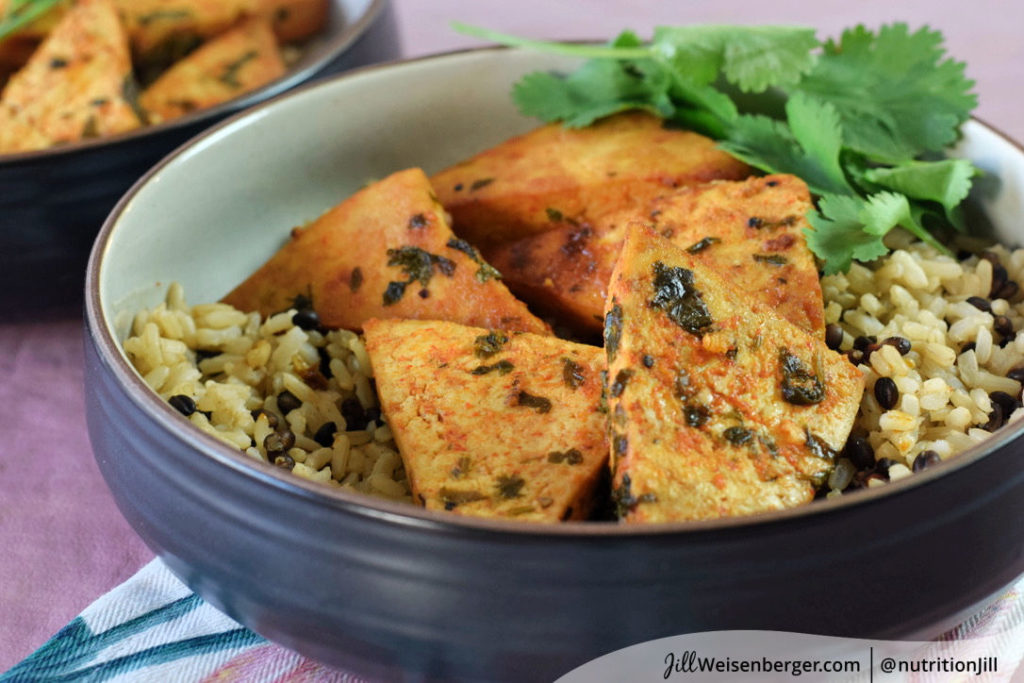
Meat-lover approved. Baked Sriracha Tofu
Protein Myth #3: Eating more protein will help you lose weight
Only up to a point.
While it’s true that protein is more satiating than carbohydrates or fats, protein still has calories (4 calories per gram – approximately the same as carbohydrate and half as much as fat). And ultimately, calories rule when it comes to weight management.
Bottom line: If you overeat to the point that your calorie intake is too high, it doesn’t matter where the calories came from.
Worth noting: I always advise my clients and students who want to lose weight that they must eat adequate protein. Otherwise, they’ll lose significant muscle along with the fat.
I’ll address what I mean by adequate in the next protein myth.
Protein Myth #4: You probably don’t get enough protein
Though protein needs are hotly debated in the nutrition world, you probably do get enough. Most Americans do. Most often, people who don’t eat enough protein simply don’t eat enough food because of health problems or poor appetite, or they don’t eat enough quality food because they’re food insecure.
If you eat well, I’m more concerned about the timing of your protein. Protein in your diet (along with strength training) stimulates muscle synthesis, and you need about 20 to 30 grams of protein per meal for optimal muscle building and maintenance. A mere 5 grams at breakfast and 15 grams at lunch won’t cut it even if you do fill your dinner plate with a large slab of meat giving you 70 or more grams of protein in the last meal of the day.
Bottom line: Spread your protein out over your day. Aim for good sources of protein at each of your three meals, including breakfast.
And here’s that boring dietitian sentence again. By eating a varied diet of wholesome foods, you’ll get adequate protein as well as other nutrients your body needs.
Worth noting: The more worrisome under-consumed nutrients are potassium, fiber, calcium, and vitamin D.
Protein Myth #5: Protein doesn’t affect blood sugar
so eat tons of protein for diabetes and prediabetes
Unlike carbohydrates, protein does not have a direct effect on your blood sugar level. That’s why many people with prediabetes or diabetes load the plate with steak and cheese.
But there are indirect effects.
- Like any source of calories, excess protein can be stored as fat, and excess body fat can make blood sugar control harder because it reduces insulin sensitivity.
- High protein foods – especially animal proteins – contain compounds called advanced glycation end products (AGEs). If we consume too many AGEs, they decrease insulin sensitivity and increase inflammation. Cooking meats with high, dry heat – like grilling – produces even more AGEs. Learn how to reduce AGEs in your diet in this article.
Bottom line: While protein has little direct effect on blood sugar, very high protein diets worsen blood sugar control. Plus, if you boost up your protein too high, you’re likely missing out on fiber, phytonutrients, and other critical nutrients from wholesome carb choices.
Next time you’re in the supermarket, you can look at the protein palooza with a more skeptical and informed eye. Make varied choices, and don’t waste your money on expensive protein-powered ice cream with 20 grams of protein per pint. That may sound like a lot, but it’s 3 servings and more than 300 calories!
Let me know if you have other protein myths I can answer.
Filed Under: Myth Busting, Nutrition
Tagged: blood sugar, diabetes, macronutrients, prediabetes, protein, weight loss

Jill Weisenberger
I'm Jill, and I believe simple changes in your mindset and health habits can bring life-changing rewards. And I don't believe in willpower. It's waaaay overrated. As a food-loving registered dietitian nutritionist, certified diabetes care and education specialist and certified health and wellness coach, I've helped thousands of people solve their food and nutrition problems. If you're looking for a better way to master this whole healthy eating/healthy living thing or if you're trying to prevent or manage diabetes or heart problems, you'll find plenty of resources right here.
Leave a Reply
2 Comments
Leave a Comment
Welcome to my Blog
Hi there! I'm Jill, a nutrition & diabetes expert and the author of 4 books.

I believe simple changes in health habits can bring you life-changing rewards.
And I believe willpower is way overrated.
Right here is where you can discover the mindset and habits to stick with healthy lifestyle choices most of the time - and drop the guilt when you don't.
Get the Second Edition!

Featured Posts



Hi Jill,
Thanks for all the knowledge and information you put out there. I actually learned some tidbits I wasn’t aware of. You put it out there in easy to understand language.
Thank you so much for sharing all your knowledge. It really makes a difference!
So glad to hear this Bonnie!