Here are 12 ways to get better blood sugar levels without feeling overwhelmed or bad about yourself. No more super strict diets.
Within the first 10 minutes of our appointment, my new client said in a determined, strong voice, “I’m not eating another carb until I lose 50 pounds!”
Inside my head, I heard myself whining, “We have our work cut out for us!”
Restrictive diets don’t work. Actually, they work great – for a very short time. But they mess with our heads – for a very long time. If my client could follow a huge list of draconian diet rules, then yes, she probably would lose weight and improve her blood sugar levels.
BUT,
More than three decades of experience tells me it won’t last.
Like other health-seekers, her willpower would desert her when stress, a migraine, or burned dinner zapped her focus and felt like the last straw. She’d dart into one of her usual fast-food restaurants and feel horrible about herself. She’d fixate on the “proof” in front of her that she’s weak-willed and destined to buy unstylish clothing in the large women’s departments for the rest of her life.
There is a better way to control blood sugar
And a happier way to live.
Skip the resolutions about the favorite foods you’ll never eat and the massive amounts of exercise you’re going to jump into; there is a better way!
Get your diabetes under control or turn around prediabetes with a fresh attitude, a sense of kindness toward yourself, and this list of 12 ways to be good to yourself and your blood sugar.
Here’s my wish list for you if you have diabetes or prediabetes.
12 ways to manage your blood sugar without being cranky or criticizing yourself.
I hope you’ll …
#1 Look at your blood sugar numbers as information
Your blood sugar numbers are not judging you. Your AIC and the numbers flashed on your blood sugar meter carry important feedback. Instead of berating yourself, ask yourself what you can learn from these numbers. You can learn a lot when the number is in your target range and when it’s not. What went well and why? What needs to change and how? Here is a massive list of factors affecting your blood sugar.
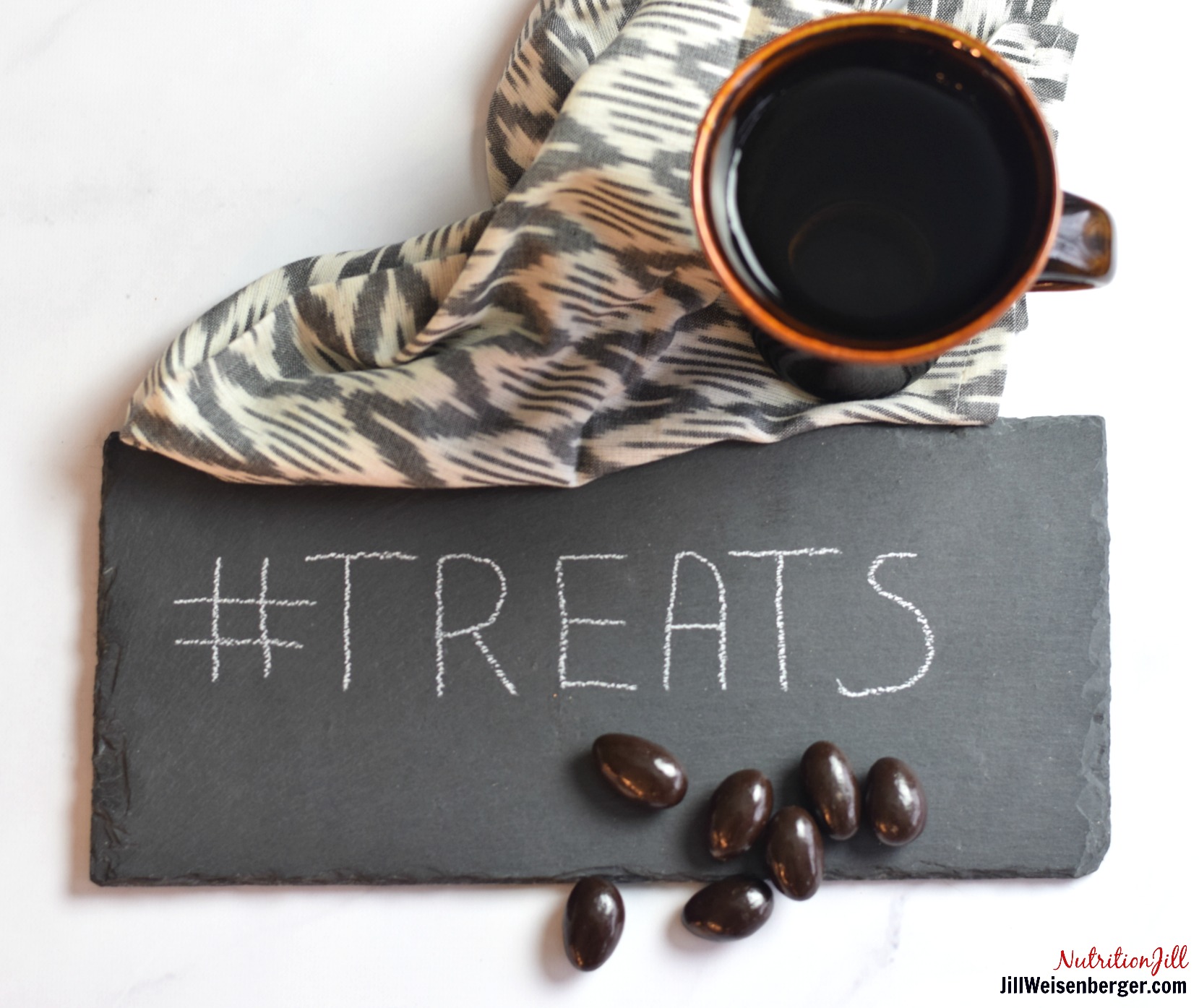
These chocolate-covered almonds are a favorite treat of mine.
#2 Look at your weight as information
Again, this number is not a judgment. It allows you to reflect on your diet and lifestyle. The number on the scale can empower you to move forward with a refined plan or it can frighten, anger, or sadden you.
Take the positive road. Your body will thank you and so will your psyche. Likewise, if you’re pleased with the number on the scale, take that as feedback too. It’s not saying: “Hey go eat some extra pie.” It’s simply letting you know that you’re working your plan and your plan is working.
Instead of plowing full force into your goal of walking 30 minutes 5 times per week, for example, start building the routine in any small way. I often see the solid habit come more readily when my clients commit to 5 or 10 minutes every day instead of starting with the full 30 minutes a couple of times each week. Doing something – even something small – every day solidifies the habit. So focus on the habit instead of the ultimate goal. Same with meal planning or meal prepping. Same with any desired lifestyle behavior. If you’re stuck on what to do next, read about Gateway Goals.
#5 Build in treat foods
Just say NO to cheats and YES to treats. The first inspires guilt. The other empowers. Give yourself permission to eat and enjoy your favorite foods.
#6 Set goals thoughtfully, not out of fear or panic
This problem is disappointingly common.
A client with diabetes or prediabetes gets an alarming lab result or a jolt when standing on the scale. They then makes a long list of diet rules and sets a lofty goal of losing 15 pounds or dropping their A1C by three full points in a month. What happens next is usually feelings of failure because the goal is too big and the focus is on the outcome, not the process. See #4 above!
#7 Remind yourself that what you do most days is more important than what you do now and then
And because this is truth, forgive your indiscretions. On those days you fail to eat mindfully or opt out of exercise, acknowledge it, learn what you can, and move on.
#8 Consider medications one more tool in the toolbox
That’s what they are.
They’re not a form of punishment. They are not a sign that you’ve failed. And they do not mean that lifestyle behaviors are any less important.
Clients often want to skip appointments with their medical providers when their weight is up or if they’ve been inattentive to their blood sugar levels. This is precisely when appointments are most critical. As healthcare professionals, our job is to help, empower and advise. It’s not to criticize. Come to your appointment, no matter what!
#10 Prioritize self-care
I know you’re busy. So am I. Taking time to exercise, plan your meals, prepare meals, measure your blood sugar, meditate, get a massage, yada yada is not selfish.
Not taking care of yourself is more selfish because it leaves you less able to care for others and may even leave you needing others to care for you. Start every day with the intention to be good to yourself.
#11 Look for your successes daily
You are successful every single day, so acknowledge it. Even if you regrettably ate two cookies – well you didn’t eat three or four or more. I’m not saying you should justify deviating from your plan, but I want you to notice it’s not all failure.
#12 Assess your progress
Lots of people keep food records or blood sugar logs but never review them critically. It’s smart to look at them daily or at least weekly to find what is and isn’t going well.
Pat yourself on the back for what’s going well and acknowledge what you can do better. Then turn the page in your journal, and write your goal for the next day.
My client was successful
We had a lot of work in front of us. But guess what? She lost over 60 pounds in about 2 years. She also learned how to keep her weight off and manage her blood sugar levels. It wasn’t a straight line to 60 pounds down. But she learned something important with each zig and zag.
I'm Jill, and I believe simple changes in your mindset and health habits can bring life-changing rewards. And I don't believe in willpower. It's waaaay overrated. As a food-loving registered dietitian nutritionist, certified diabetes care and education specialist and certified health and wellness coach, I've helped thousands of people solve their food and nutrition problems. If you're looking for a better way to master this whole healthy eating/healthy living thing or if you're trying to prevent or manage diabetes or heart problems, you'll find plenty of resources right here.
Leave a Reply
1 Comment
تمريض منزليon February 2, 2022 at 5:10 am
i like this article, it has a lot of info i need to know, thanks for sharing
Hi there! I'm Jill, a nutrition & diabetes expert and the author of 4 books.
I believe simple changes in health habits can bring you life-changing rewards.
And I believe willpower is way overrated.
Right here is where you can discover the mindset and habits to stick with healthy lifestyle choices most of the time - and drop the guilt when you don't.















i like this article, it has a lot of info i need to know, thanks for sharing