
My Fascinating Day on a Norwegian Fish Farm
I’m a fish pusher. Yes, I want you to eat fish a couple times each week. As you probably know, I’m also a pusher of beans, lentils, veggies, fruits, nuts, whole grains, yogurt, very small amounts of dark chocolate and a few other delicious, health-boosting foods. But today’s post is all about fish. And that’s because it’s good for the heart, the brain and more. It’s nutrient-rich and versatile.

Delicious clip fish over pureed peas and tarragon from Mathallen In Tromsø, Norway.
Lucky for me, I was a guest of the Norwegian Seafood Council in their beautiful country. I was invited to learn about Norwegian wild and farmed fish, their culture and their people. And what an amazing trip I had! I am not paid to write this post nor was I asked to write it. My trip was just too special not to share.
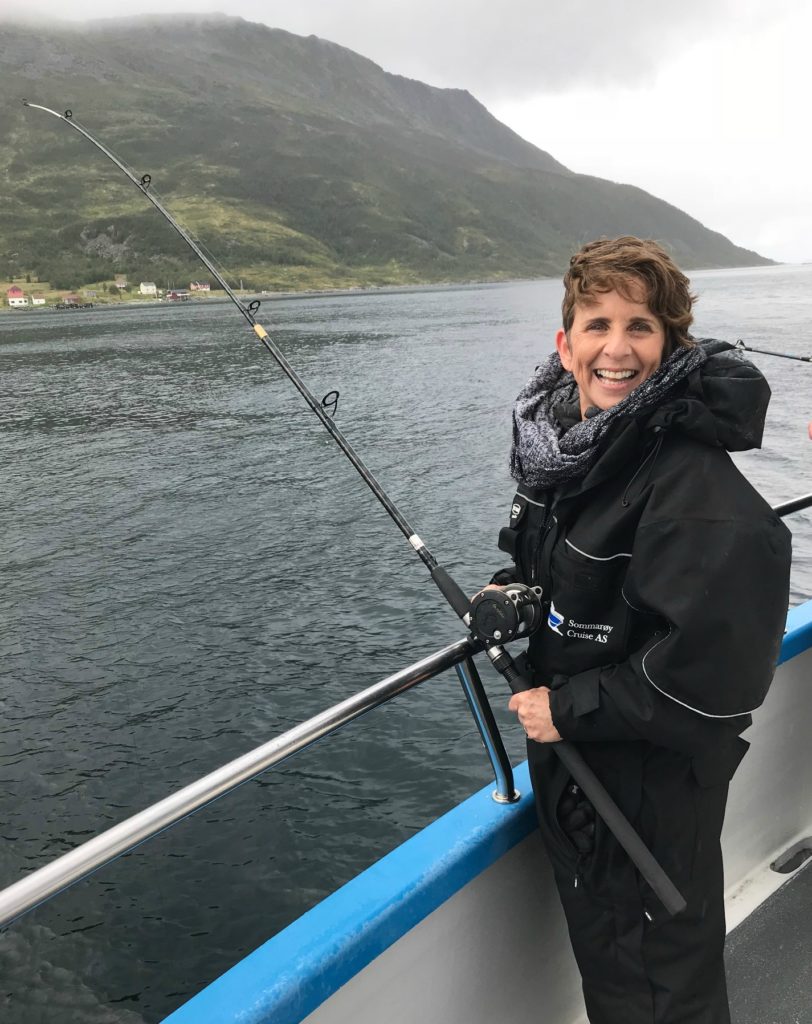
Even though I eat fish at least a couple times each week, I don’t remember if I ever fished before. But here I am catching a few fish, and all of a sudden, I realize I’m fishing in Norway! It was unexpectedly very exciting.
A Few Interesting Tidbits about Norway and Norwegian Seafood
- Norway is the second largest exporter of seafood in the world.
- In the US, we’ll find both wild and farmed Norwegian seafood.
- The cold, cold waters in Norway are home to many common varieties of seafood including cod, haddock, king crab, salmon, prawns, steelhead trout, and halibut. There is 7 times more ocean than land in Norway.

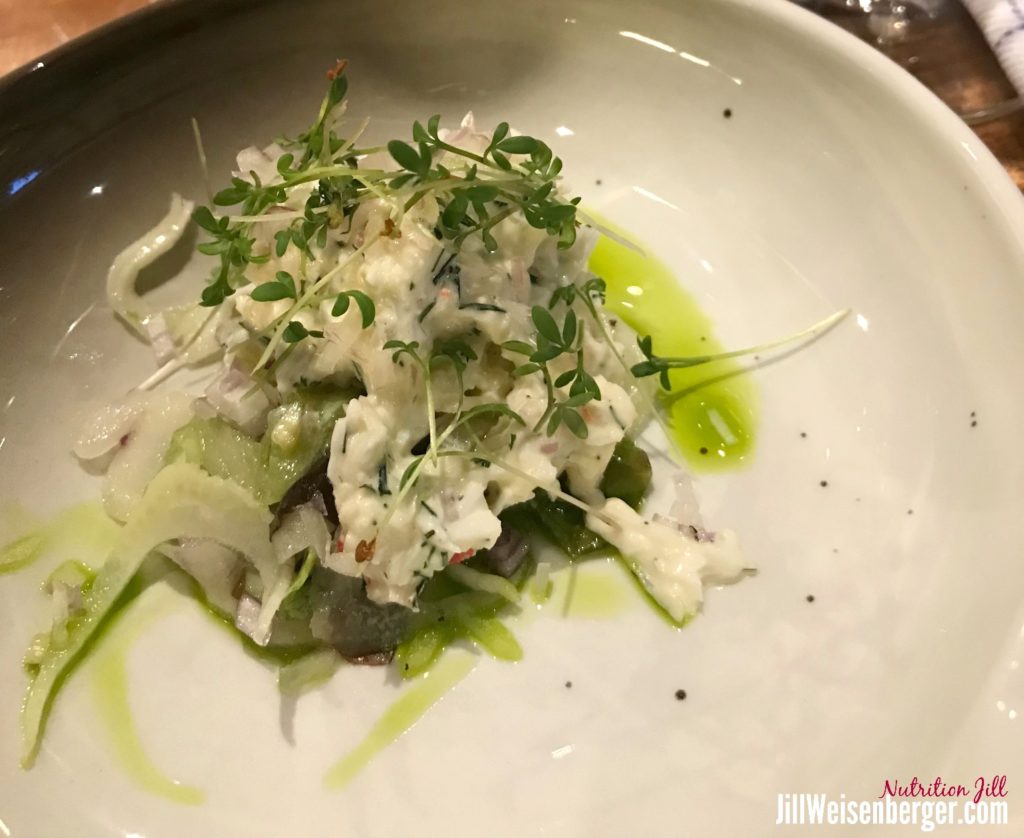
Norwegian King Crab Salad with fennel, dill, lemon mayonnaise and watercress from Mathallen In Tromsø, Norway. This was my favorite of 7 courses at this fabulous restaurant.
- Given the very dark, long, bitter cold winters and the short summers, I was surprised by their dedication to an outdoor lifestyle. In each town I visited, the streets were filled with people day and night. Dogs tagged along and visited nearly every type of establishment except for indoor restaurants. Students bike to school except when they ski to school. At the University of Tromsø, we saw bike racks that converted to ski racks. After a snow, hiking trails quickly become cross country skiing trails.
- According to officials at the Institute of Marine Research, sea ice has been declining 13.3% each decade since 1990, and the arctic is likely to be ice free by 2040. The change in global temperatures has been good for cod, which have increased in size and population. However, marine mammals are declining and are slimmer, and small arctic fish are suffering from the abundance of cod and warmer temperatures.
- Cod is the preferred fish for fish cakes, and this has something to do with its amino acid profile though I cannot figure out exactly what.
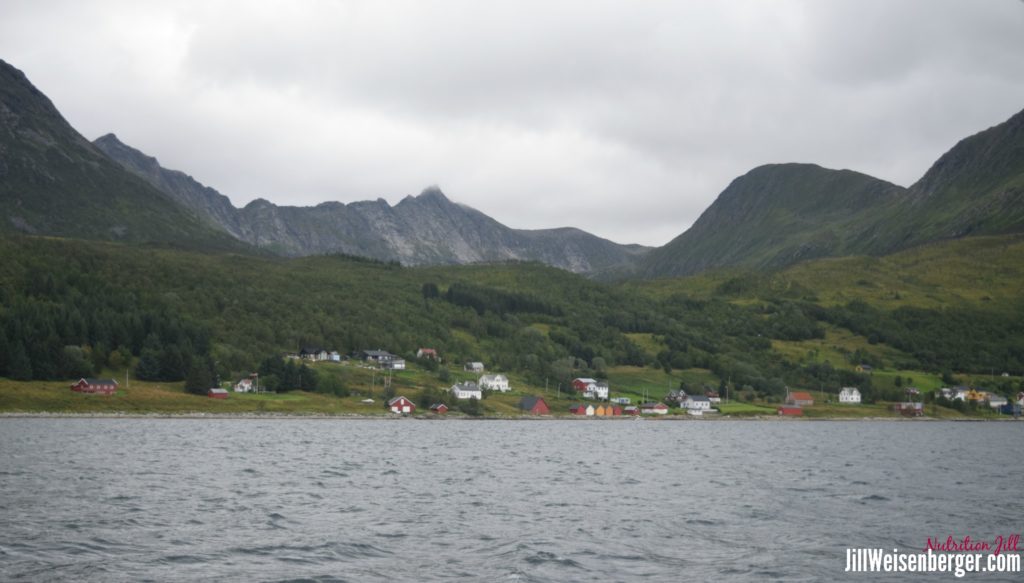
The beautiful scenery from the fishing boat near Tromsø, Norway. Various shades of red and yellow on houses are very common.
Norwegian Farmed Fish in Pictures
We visited Steinvik Fiskefarm to learn about farmed fish, particularly about farmed Norwegian salmon. Our hosts, Alex and Anne Karin, treated us to an informative and lovely day.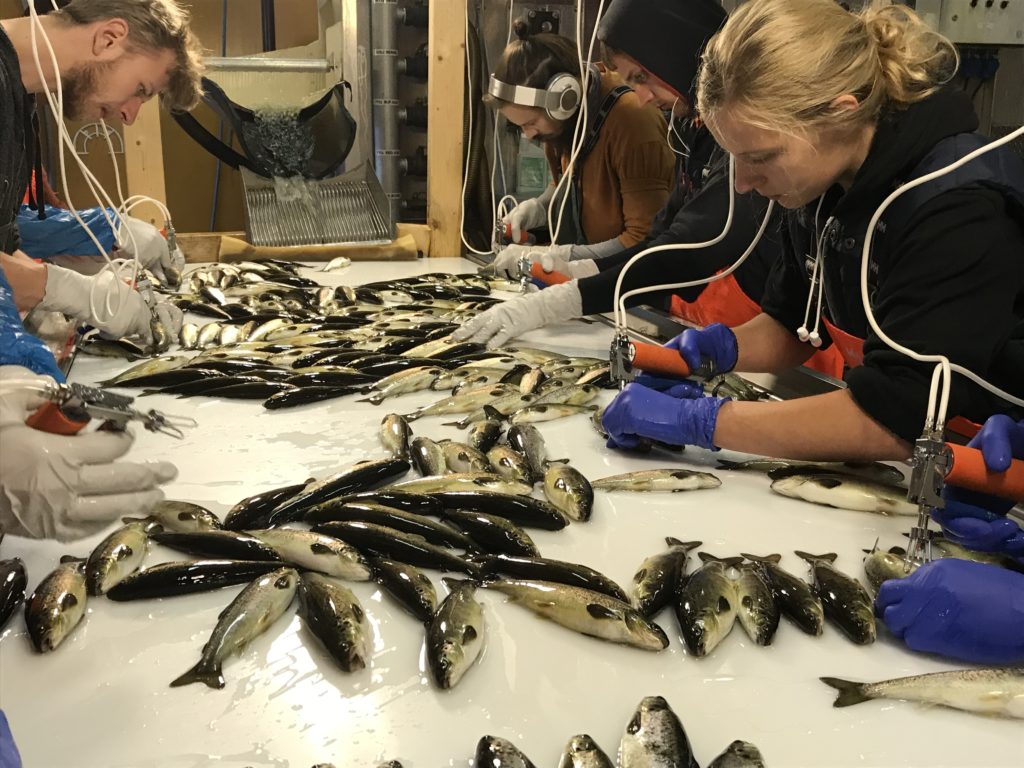
The Norwegian farmed fish industry is essentially without antibiotics. Here is a crew of trained people delivering 7 vaccines in 1 quick injection to young salmon. At this stage of development, the fish still live in fresh water. After they receive brief anesthetic, they’re transported to this platform for what looks like speed vaccinations. They’re returned to water very, very quickly.
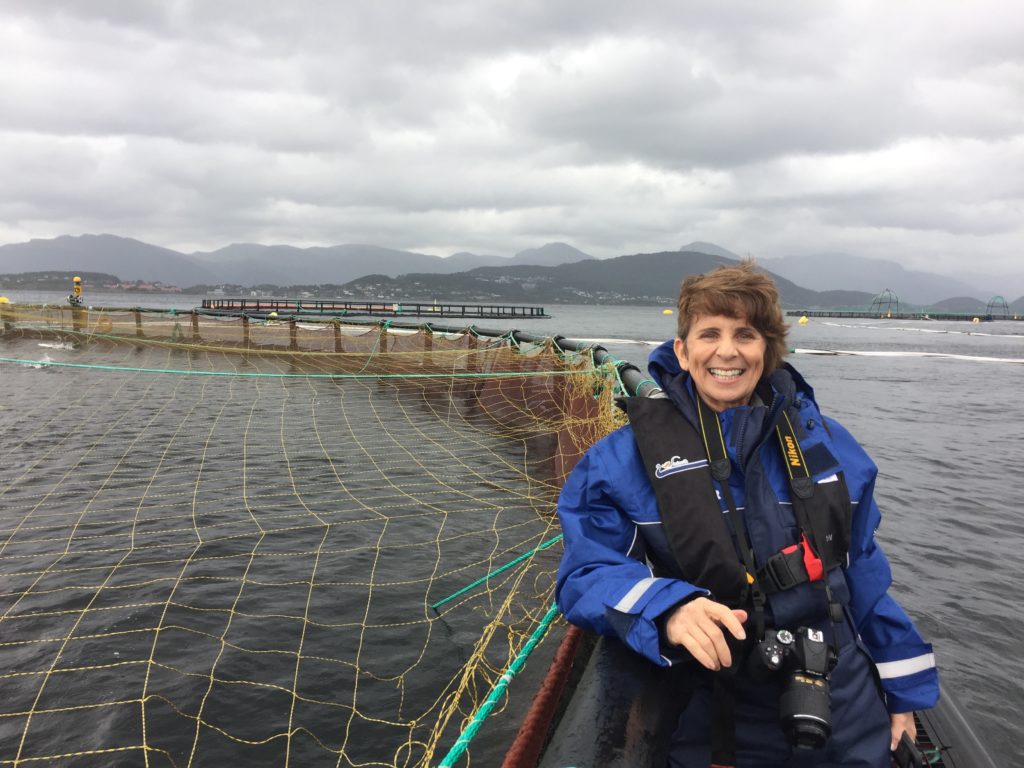
It was exhilarating to walk along the rim of a fish pen. Honestly, I was a bit afraid of falling in or dropping my phone.
Once the fish are old enough, they’re brought out here to live in salt water. Wild fish, by the way, spend their young lives in a fresh water river and then swim out to the ocean. Fish farmers raise their fish in a similar way.
Fish farmers need patience because it takes about 3 years to get a mature salmon from an egg.

 The fish are fed through a hose that spins from the center of the pen. Cameras below allow someone to watch from a distance. Once the fish stop grabbing for their food, the hose is turned off and feeding is suspended.
Here is a handful of food for farmed fish. Farmed salmon is loaded with omega-3 fatty acids because their food is also loaded with it. Astaxanthin, which is a cousin to beta-carotene and added to the food, imparts that orange-y color we like and expect in our salmon.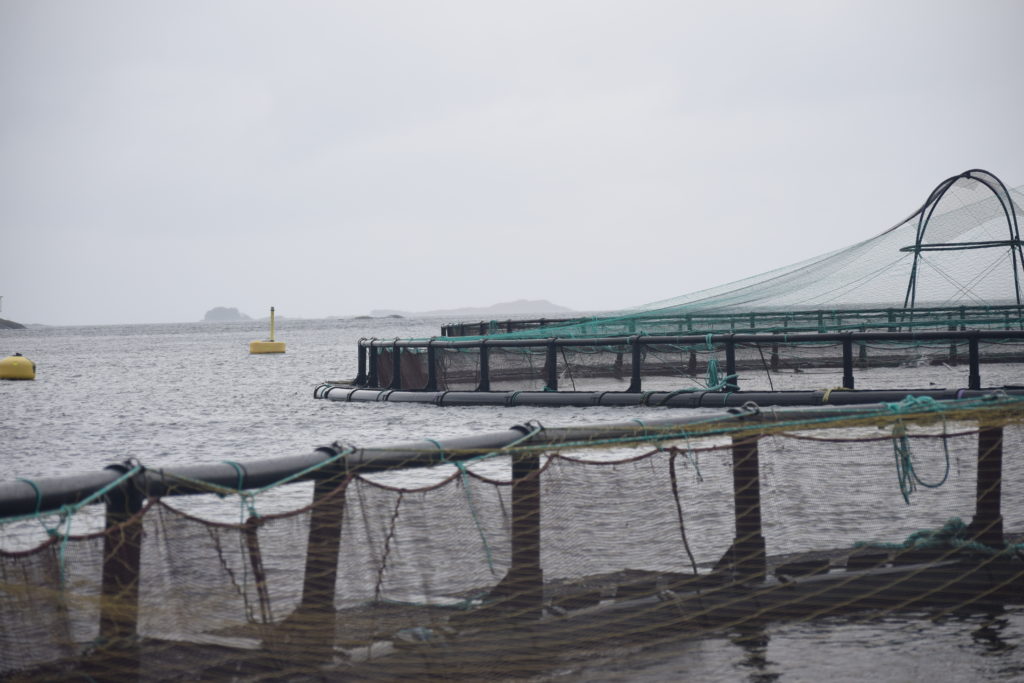
While I was standing on the rim, I watched salmon jumping and spinning. They have plenty of room for that because this net is far enough from the water’s surface. Interestingly, I also saw a bird swoop down and grab a wild fish swimming near these pens.
Each pen holds about 90,000 fish. By volume, the pens are about 97% water and 3% fish. 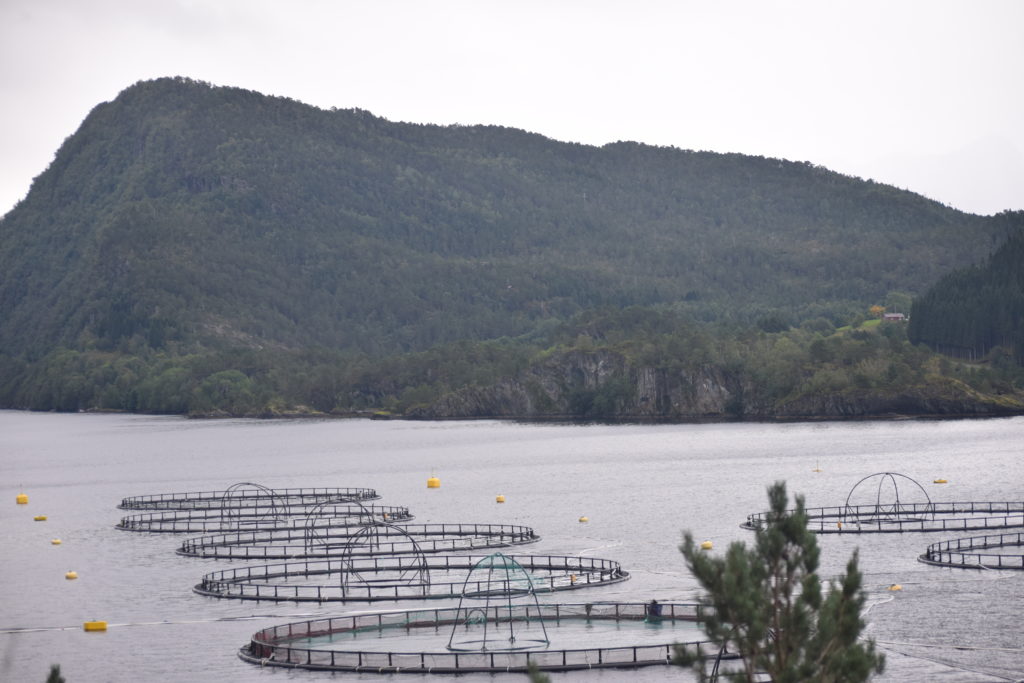
These pens are empty. After harvesting fish, farmers allow their pens to rest for a few months before bringing fish here again.
Filed Under: Nutrition
Tagged: farm to table, fish

Jill Weisenberger
I'm Jill, and I believe simple changes in your mindset and health habits can bring life-changing rewards. And I don't believe in willpower. It's waaaay overrated. As a food-loving registered dietitian nutritionist, certified diabetes care and education specialist and certified health and wellness coach, I've helped thousands of people solve their food and nutrition problems. If you're looking for a better way to master this whole healthy eating/healthy living thing or if you're trying to prevent or manage diabetes or heart problems, you'll find plenty of resources right here.
Leave a Reply
2 Comments
Leave a Comment
Welcome to my Blog
Hi there! I'm Jill, a nutrition & diabetes expert and the author of 4 books.

I believe simple changes in health habits can bring you life-changing rewards.
And I believe willpower is way overrated.
Right here is where you can discover the mindset and habits to stick with healthy lifestyle choices most of the time - and drop the guilt when you don't.
Get the Second Edition!

Featured Posts



Jill, what a great and informative article. I miss seeing you and your family. Keep up the great work. Dr. Bruce Fuller
Thank you! This was such a great and unique experience. And I suspect we miss seeing you even more!