
Diabetes Risk Factors: Learn Your Risk for Type 2 Diabetes
Do you hear the alarm? Do you know the diabetes risk factors? It’s American Diabetes Association Alert Day! Now is the time to remind everyone that diabetes is very common and lots of people with diabetes don’t know they have this health problem. Do you?
Take the Type 2 Diabetes Risk Test. The American Diabetes Association (ADA) created a 60-second test with 7 easy-to-answer questions. Nearly 1 in 10 Americans has diabetes. Sadly about one-quarter of them haven’t been diagnosed. And that puts them at high risk of complications including nerve damage, heart disease and stroke. If the Diabetes Risk Test suggests that you have a high risk for diabetes, please talk to your healthcare provider about getting the proper blood test to diagnose diabetes and prediabetes.
People with prediabetes or type 2 diabetes have already lost some ability to produce insulin. Compounding the problem, the body is resistant to the action of insulin. Because of this, their blood sugar levels rise too high. There are other problems too. Diabetes and prediabetes are not only about blood sugar. But measuring blood sugar levels is how we diagnose diabetes and prediabetes. More on that below.
Symptoms of Type 2 Diabetes
Some people have no symptoms at all, but others have very obvious symptoms. Here are the most common symptoms of diabetes.
- Frequent urination (that’s your body’s attempt to get rid of some of that excess blood sugar)
- Feeling very thirsty (because you’re urinating more)
- Being hungrier than usual even if you’re eating your typical amount of food
- Feeling tired
- Blurry vision
- Cuts are slow to heal
- Tingling, discomfort, or numbness in your hands or feet (this suggests that you’ve had high blood sugar levels for a long time and that they have damaged the nerves in your hands and feet)
- Sudden weight loss even though you’re eating normally or even more than usual (this is a sign of type 1 diabetes, not usually type 2)
Symptoms of Prediabetes
Want some free worksheets to help with your lifestyle reset? Just enter your email address below.
Most people with prediabetes will not be aware of any symptoms. However, some will have a few of the symptoms of diabetes described above, and others may even have complications like nerve damage.
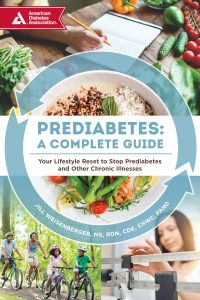
Prediabetes is the leading risk factor for type 2 diabetes. Like type 2 diabetes, it also increases your risk for heart disease, stroke and even some types of cancer. Prediabetes, which afflicts approximately 84 million Americans, is a sign that something is metabolically awry. Unfortunately, only about 12% of people with prediabetes are aware that they have this problem. That means that about 74 million Americans have prediabetes and don’t know it! Though it sounds scary to have a metabolic disorder, there is so much you can do to prevent it from getting worse – and possibly even reverse prediabetes. I’m going to write more blog posts about this topic, so stay tuned. And, of course, the reason that I wrote Prediabetes: A Complete Guide, is to help people with prediabetes reset their lifestyles to live healthfully and prevent diabetes.
Type 2 Diabetes Risk Factors
Having prediabetes is a strong risk factor for developing type 2 diabetes. Each of the following factors increases your risk for both prediabetes and type 2 diabetes.
These are prediabetes and diabetes risk factors beyond your control.
- Age: With each birthday, your risk increases.
- Gender: Men have a greater risk than women.
- Race/ethnicity: Your risk is higher than average if you are African American, Latino, Native American, Asian American or Pacific Islander.
- You have a family history of prediabetes or type 2 diabetes
- You are a woman who had gestational diabetes (diabetes that occurred during pregnancy)
- You are a woman with polycystic ovary syndrome (PCOS)
And here are some diabetes risk factors that you can influence. Some are directly related to the development of prediabetes and type 2 diabetes. Others may simply be signals that your risk is higher than average. Do you see something on this list that you can change? Even just a little?
- Overweight and Obesity: As weight increases, so does your risk.
- Inactivity: Being physically active helps your body use glucose better.
- High blood pressure
- High triglyceride levels
- Low HDL (good) cholesterol levels
- Heart disease or blood vessel problems
- Too little sleep: Getting between 7 and 8 hours of sleep most nights is associated with the lowest risk of developing type 2 diabetes.
- Smoking
Diagnosing Diabetes and Prediabetes
The chart below shows you the blood tests and results that healthcare providers use to diagnose diabetes and prediabetes. If you have an abnormal result, your healthcare provider will order a second test to confirm your diagnosis.
| Test | Prediabetes | Diabetes |
|---|---|---|
| Fasting Plasma Glucose | 100 - 125 mg/dl | > 126 mg/dl |
| 2-hour OGTT (oral glucose tolerance test) | 140 - 199 mg/dl | > 200 mg/dl |
| Random plasma glucose in an individual with symptoms of diabetes such as excessive thirst and urination | Not done to diagnose prediabetes | > 200 mg/dl |
| A1C (an indicator of average blood glucose levels for the previous 2 - 3 months) | 5.7 - 6.4 % | > 6.5% |
So now you see the importance of the Type 2 Diabetes Risk Test. And it takes just seconds to learn your risk. You might find these posts interesting also. And be sure to check out the great info at the American Diabetes Association.
- Lifestyle Changes or Drugs for Diabetes Management
- New Year’s Resolutions for Diabetes and Prediabetes
- Blood Sugar Basics
- How to Count Carbs for Diabetes Management
- Exercise and Diabetes
And of course, don’t forget to check out my diabetes and prediabetes books and get your free strategies for sticking to a healthy lifestyle by entering your email in the signup form on this page.
Filed Under: Diabetes, Prediabetes
Tagged: blood sugar, diabetes, prediabetes

Jill Weisenberger
I'm Jill, and I believe simple changes in your mindset and health habits can bring life-changing rewards. And I don't believe in willpower. It's waaaay overrated. As a food-loving registered dietitian nutritionist, certified diabetes care and education specialist and certified health and wellness coach, I've helped thousands of people solve their food and nutrition problems. If you're looking for a better way to master this whole healthy eating/healthy living thing or if you're trying to prevent or manage diabetes or heart problems, you'll find plenty of resources right here.
Leave a Reply
Welcome to my Blog
Hi there! I'm Jill, a nutrition & diabetes expert and the author of 4 books.

I believe simple changes in health habits can bring you life-changing rewards.
And I believe willpower is way overrated.
Right here is where you can discover the mindset and habits to stick with healthy lifestyle choices most of the time - and drop the guilt when you don't.
Get the Second Edition!

Featured Posts