

Do THIS tonight for a slimmer you and better blood sugar levels tomorrow
How does sleep affect blood sugar levels? It’s like a see-saw. When you get too little sleep – or lousy sleep – your blood sugar can go up. Plus, poor sleep might lead to weight gain.
I wished I could inject caffeine directly into my brain.
Even with a few cups of coffee in me, I’d struggle not to slouch and to hold my head up. There’s no way I could find that voice that says, “Hello! Good morning. I’m here and awake!”
Why was I chronically sleepy?
I was busy with work, kids, a house, a couple dogs. You know what it’s like. And I justified that skimping on sleep was the only way to get things done. I believed I had no choice and that I could suffer through the constant yawning and droopy eyes.
True confession: Sometimes, I chose to stay up late because I craved more fun. Hello Netflix.
It turns out that hijacking your sleep to have more fun or to get more done has lots of lousy health ramifications, including bumped-up risks of obesity, prediabetes, diabetes, and heart disease.

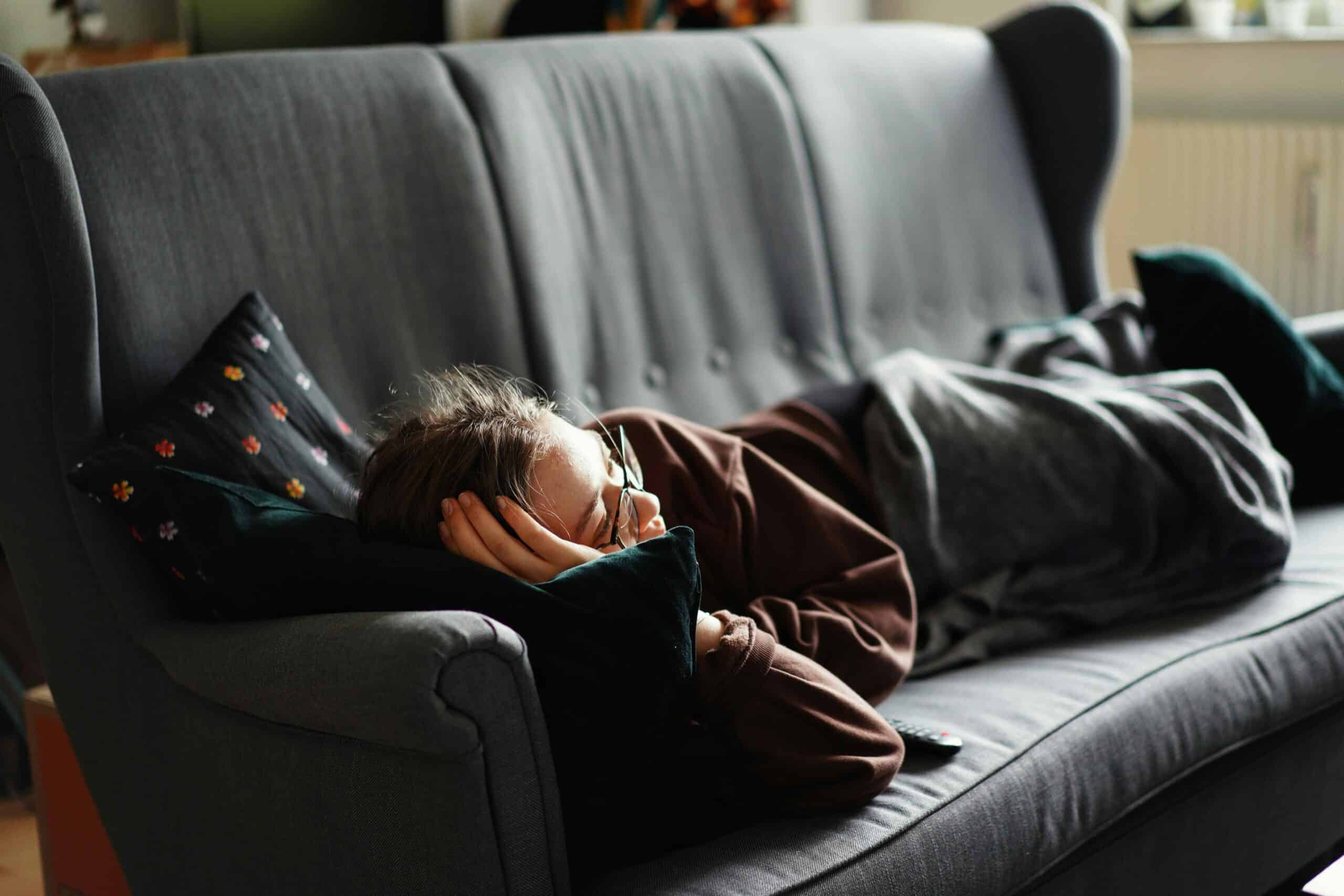
How does sleep affect blood sugar levels? It’s like a see-saw. When you get too little sleep – or lousy sleep – your blood sugar can go up. Better sleep can bring your blood sugar down – the very next day. Photo credit: Yiseul Han
How does sleep affect blood sugar?
Here’s why your blood sugar takes a hit when you don’t get enough sleep or sound enough sleep.
Cortisol and growth hormone get out of balance, which hurts insulin sensitivity. Scientists found that restricting sleep for even just one night to 4 hours impaired insulin sensitivity by 20 – 25% compared to sleeping 8.5 hours. A more recent study of healthy adults found that going to bed later than usual or getting a poor night’s sleep led to higher blood sugar responses after breakfast the following day.
Being over-tired feels like garbage
Feeling lousy makes it so much harder to keep my health goals front and center. Here’s how I deal with too little sleep:
- I crave lounging on the couch with the TV humming in the background. I don’t crave hitting the gym, digging weeds from my overgrown garden, or even taking a walk to the end of my driveway to bring in the mail.
- And I’m more likely to crave cozy, comfy mac and cheese than wholesome, high-fiber, protein-rich Chickpeas with Lemongrass, Ginger and Farro with a salad, and roasted veggies.
The bottom line: Sleep well tonight, have better blood sugar levels tomorrow. Get to bed early and don’t sacrifice your sleep. It’s at least as important as what you eat. Plus, it’s much easier to tend to self-care when we’re rested (and not grumpy).
Aim for 7 – 9 hours of sleep nightly if you’re younger than 65 and 7 – 8 hours each night if you’re over 65 years old, according to the National Sleep Foundation.
By the way, my chickpea and farro recipe is worth the little bit of effort. It comes together in a single pot and makes your kitchen smell so delicious.

Chickpeas with Lemongrass, Ginger, and Farro – amazingly delicious and all in one pot
Too little sleep affects your weight too
Sleeping too little or sleeping poorly upsets your appetite hormones too. So it’s not just being too lazy to make a scratch dinner that makes you crave mac and cheese.
Ghrelin – the hunger hormone – goes up and leptin – a hormone that makes us feel full – drops.
Researchers found that sleep-deprived healthy adults ate several hundred calories more the following day compared to what they ate when allowed to sleep a full night.
And in a more recent and fascinating study, sleep experts at the University of Chicago followed 80 adults for two weeks – not in a lab, but in the participants’ own homes. All of the subjects regularly slept for less than 6.5 hours. Half of the subjects took a behavioral program (intervention group) designed to help them manage their sleep better. The researchers told the other half to keep doing what they always did (control group).
Very interesting results
Using sleep monitoring equipment, advanced X-ray technology (DEXA), and doubly labeled water, the researchers compared the two groups of sleepers. The intervention group – those who took the sleep training program – had these results compared to the other group.
- They slept, on average, almost 1.25 hours longer.
- They ate approximately 3, 780 calories less. That’s about 270 fewer calories every single day.
- There was no difference in the amount of calories burned.
- They lost a tiny bit of weight.
Is this significant?
It’s a very small study that lasted just a short time. But the participants made their own food and exercise choices in their own homes and on their schedules. Most sleep studies take place in a lab, so we always wonder if the results apply to real people living real lives.
Another group of scientists will have to run a similar study to either confirm or refute the University of Chicago’s findings, but to me, getting an extra hour of sleep is a no-brainer.
Go ahead, imagine how much better you’ll feel with a reasonable amount of sleep. And research links better sleep to these improved outcomes:
- cancer prevention
- heart health
- insulin sensitivity and blood sugar levels (even in people who do not have prediabetes or diabetes)
- weight control
- brain health
- better memory
- better mood
- overall feelings of well-being
13 things you can do to get a better night’s sleep
– and help manage your weight and your blood sugar, and so much more

You can do more of this when you regularly get enough sleep.
Photo credit: Joshua Earle
- Seek the light in the morning. Light stimulates a part of your brain that affects your feelings of wakefulness and drowsiness. So shining a light on yourself during the day and dimming the lights at night helps maintain your body’s natural rhythms.
- Open the blinds first thing in the morning. Why? Light stimulates the release of cortisol, raises your body temperature, and inhibits the release of melatonin, the hormone that invites you to crawl back into bed.
- Mind the light at night. Avoid light from TV, tablets, and computers shortly before bed. And keep your room dark. Use blackout blinds to block light from outside. If you need a light in the middle of the night, shine a low-illumination nightlight in your hallway or bathroom. Turn your clock away or dim its light. If someone else needs a light on, go to bed with an eye mask.
- Crazy that it took me nearly 38 years of marriage to start using an eye mask. Now, I sleep more and feel less annoyed at my husband who likes to stay up later than I do.
- Create a bedtime routine. The National Sleep Foundation recommends getting to bed and waking up at approximately the same time each day – even on weekends. To ease yourself into bed and sleep, establish a soothing nighttime ritual such as reading (not on a tablet, computer, or phone), meditating, practicing yoga, sipping hot decaffeinated tea (always in a pretty cup), or listening to relaxing music. Check out a diabetes bedtime routine for a soothing night and energized tomorrow.
- Stay cool. Experts recommend dialing down the temperature to a cool 60 – 67°F. A warm bath or shower before bed can ease you into slumber too because it first raises your body temperature. Then when you walk into your cooler bedroom, you’ll feel drowsier.
- Quiet the noise. If noises disturb you, block them with earplugs, a fan, or a white noise machine. My daughter travels everywhere with her white noise machine. I’m not sure she could have gotten through graduate school without it.
- Get comfy. Maybe it’s time for a new mattress, sheets, or pillow. Or maybe it’s time to send your pets or children to their own beds.

You’ll be less inclined to do this if you sleep well regularly.
Photo credit: Adrian Swancar - Don’t fret. Instead of lying in bed watching the clock and worrying about losing z’s, relax with deep breathing exercises or meditation. If that doesn’t send you to sleep, get out of bed for a short time to read or listen to soothing music.
- Eat wisely. Avoid large meals for three or so hours before bed. If you’re hungry before bed, eat a very small snack.
- Drink wisely. Wine, beer, and other alcoholic beverages may push you to sleep faster, but they will also wake you up sooner and more often. Plus, alcohol might interfere with circadian rhythms, block REM sleep (that’s when you do most of your dreaming), increase snoring, and send you to the bathroom a bunch. That’s the exact opposite of getting a good night’s sleep.
- Be active daily. Regular exercise means more sleep and sounder sleep. Plus, it’s all-around amazing for you!
- Avoid nicotine. It’s a stimulant, and it’s nasty for you.
- Talk with your healthcare provider. If you lose sleep more than now and then, it’s time to get help. You may have a sleep disorder or an underlying medical condition. If you wake up frequently to urinate, you may have high blood sugar.
- Avoid caffeine. While it fights daytime sleepiness, it increases alertness and causes insomnia. One study found that consuming caffeine as early as six hours before bed hinders good sleep though it varies considerably from person to person.
Well, even if I did have a caffeine portal going right into my brain to give me some oomph for work, it probably would have kept me up at night and started that awful cycle again. These days, I cherish my sleep. No Netflix (or Amazon Prime or Apple TV or Disney Plus) past 10:00.
Filed Under: Diabetes, Healthy Brain, Heart Health, Prediabetes, Weight Loss
Tagged: blood sugar, diabetes, prediabetes, sleep

Jill Weisenberger
I'm Jill, and I believe simple changes in your mindset and health habits can bring life-changing rewards. And I don't believe in willpower. It's waaaay overrated. As a food-loving registered dietitian nutritionist, certified diabetes care and education specialist and certified health and wellness coach, I've helped thousands of people solve their food and nutrition problems. If you're looking for a better way to master this whole healthy eating/healthy living thing or if you're trying to prevent or manage diabetes or heart problems, you'll find plenty of resources right here.
Leave a Reply
3 Comments
Leave a Comment
Welcome to my Blog
Hi there! I'm Jill, a nutrition & diabetes expert and the author of 4 books.

I believe simple changes in health habits can bring you life-changing rewards.
And I believe willpower is way overrated.
Right here is where you can discover the mindset and habits to stick with healthy lifestyle choices most of the time - and drop the guilt when you don't.
Get the Second Edition!

Featured Posts





Like to try Blueberry baked oatmeal. Do you know how many grams of sugar? Doesn’t say on recipe
You mean this baked blueberry oatmeal, right? There are about 9 grams of added sugar per serving. If you replace the brown sugar with Swerve brown sugar replacement, you can avoid all the added sugars. Without the brown sugar, there will be approximately 20 grams of total carbohydrate per serving, with 3 of those grams coming from fiber. I haven’t calculated total sugars because the total carbohydrate is the more important number. If you try it with Swerve, I’d love to know. I like Swerve brown sugar replacement a lot. It’s made of erythritol.
Insightful article, Jill. I find 8 hours is my sweet spot for sleep; any more tends to feel counter-productive, and I’m groggy all day. Yet, if I wake up too early and miss my last sleep cycle and that valuable final REM stage, I am a mess, too!
In the evening, sugar is my sleep enemy, so a big no, although I may have a small piece of dark chocolate to keep my spirits up while I am studying! 🙂