You ask: “how much weight should I lose.” Here’s what you should consider. Plus, good news that even a small weight loss is fantastic for you.
“What should I weigh?” “How much weight should I lose?” I hear these questions all the time.
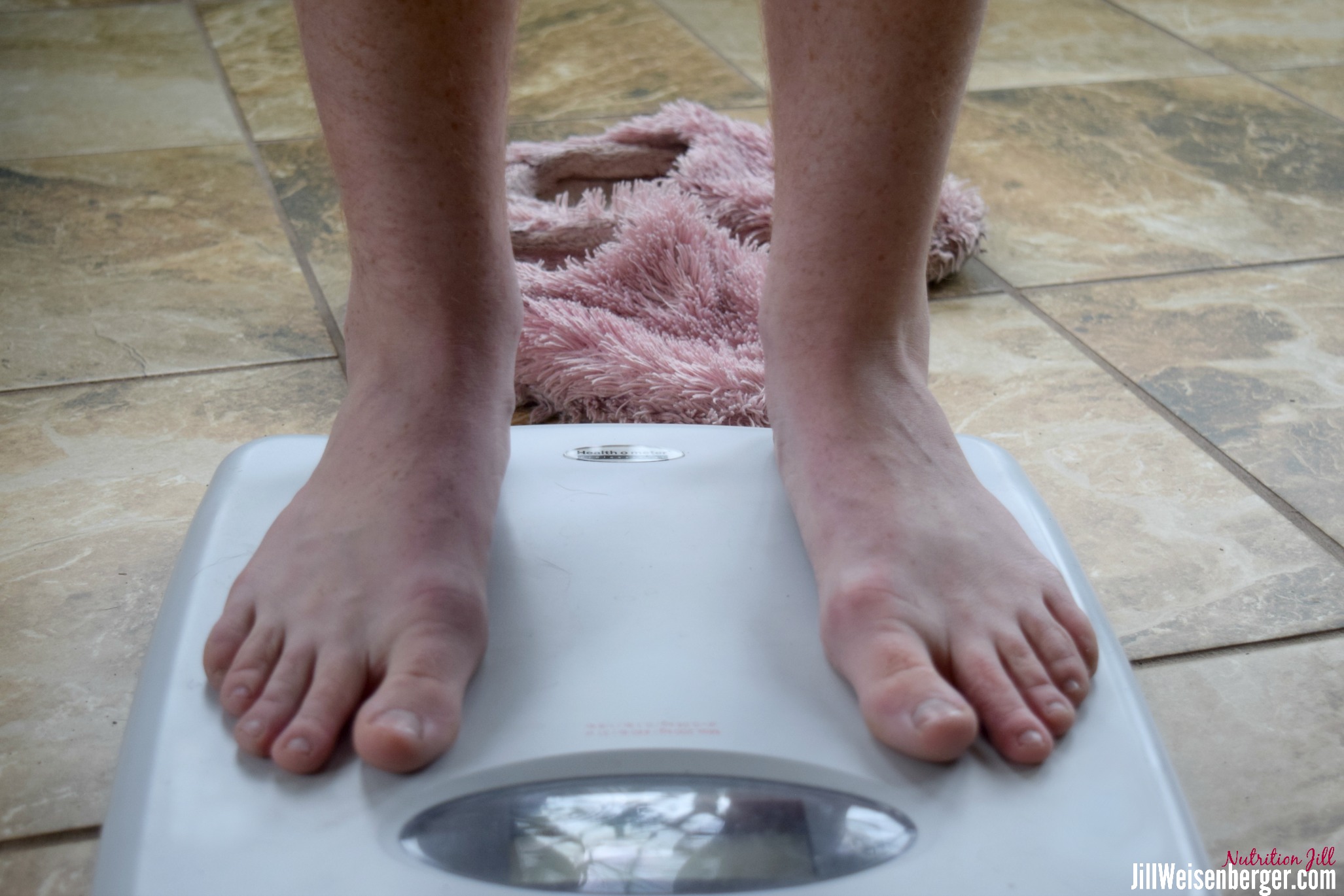
The number on the scale is information. It’s feedback on your plan. It’s NOT a judgment!
Excess body fat is linked to health problems, including prediabetes, type 2 diabetes, heart disease, some types of cancer, and more. No wonder so many people are trying to lose weight.
But no matter how many times you ask me “how much weight should I lose,” I’ll always toss the question back to you. Your weight is personal, so it’s not up to me.
Of course, this conversation is for people with overweight or obesity. Unfortunately, society encourages us to be quite thin and puts pressure on us to lose weight even when it isn’t healthful. Let’s stand together and shout NO to that.
You can look at this BMI chart to give you some guidance about your own weight status.
How much weight should I lose?
Here are 5 things to know before picking your weight loss goal.
#1: Your health habits are critical regardless of your weight
If the only thing that mattered was how much you weight you lost, you could wire your jaw shut, swallow a tapeworm, or eat spoiled meat to get food poisoning. But that would be ridiculous. Losing weight should enhance your health and your life.
Eating a balanced, plant slant diet; getting adequate sleep; and being physically active everyday – are critical no matter what your weight.
A bunch of leftovers and some fresh strawberries went into this bowl to create a wholesome, balanced meal.
#2: Not gaining weight matters most
Many of my clients seesawed between actively trying to lose weight and paying zero attention to their food intake or the scale. But if you have overweight or obesity or if you’ve gained unwanted weight, the most important weight goal is to stop gaining weight.
Losing weight is a tug of war. As your body composition changes, so do your appetite hormones. Learn more about the truth about weight loss.
#3: Any amount of weight loss is a boon to your health
Losing 5 – 10% of starting weight – say 10 – 20 pounds for someone weighing 200 pounds – is an enormous improvement. You don’t have to lose gobs of weight to get lots healthier.
#4: Your weight loss goal can change overtime
You might choose to lose 5% of your weight and then decide to lose another 5%. Or you might pick a goal to lose 25 pounds and decide you’re thrilled with a loss of 18 pounds. It’s okay to put the breaks on your weight loss plan. And it’s okay to restart it next month, next year or anytime.
#5: Weight loss isn’t a race
I know (I really, really know) you want those excess pounds gone NOW. But my experience tells me it’s better to lose weight gradually and learn to keep it off than to engage in unsustainable eating and exercise habits.
You know that already too.
What losing only a few pounds can do for you
Even if you don’t see a big difference in the mirror, good things are happening under the surface.
Better insulin sensitivity & less liver fat
In a a very cool study among people at high risk for developing type 2 diabetes, losing only 5% of body weight improved insulin sensitivity in their fat, muscle and liver cells. That small weight loss even improved insulin production in the beta-cells of the pancreas. And liver fat shrunk too.
As the participants lost more weight – first to 11% and then to 16% of their starting weights, they benefited even more. They lost more liver fat, had greater improvements in the beta-cells and experienced more insulin sensitivity at the muscle cells.
Prevent type 2 diabetes
Many studies show that moderate weight loss helps people prevent or delay the onset of type 2 diabetes. In the federally-funded Diabetes Prevention Program (DPP), losing about 7% of starting weight reduced the participants’ risk of developing type 2 diabetes by a whopping 58% during the 3-year study. And 15 years after the start of the study, their risk was still 27% lower.
Do keep in mind, however, that not everyone with prediabetes carries excess weight. Thin people may not benefit from weight loss, but there’s still plenty they can do to prevent diabetes.
When women with obesity and knee osteoarthritis lost an average of 15 pounds, they reported less pain and better quality of life.
Prevent cancer
Dropping a few pounds might lower your risk for several types of cancer. We don’t yet have concrete research to say just how much weight loss lowers risk, but we do know that excess body fat is linked to at least a dozen types of cancer, including postmenopausal breast cancer and cancers of the pancreas and colon. Fat is metabolically active tissue and affects the body’s levels of insulin, estrogen and other compounds like cytokines that influence cancer risk. Losing weight also affects these levels and likely lowers your risk.
And so much more
Weight loss improves cholesterol levels and markers of inflammation, such as c-reactive protein
While weight loss is important, it’s not the only thing you can do to lower your risk of diabetes, heart disease, stroke, cancer and other health problems.
A common problem with “dieting” is that it puts the focus on the pounds lost instead of emphasizing the healthy habits that promote weight loss and help maintain your new smaller body. I’d rather you lead a healthy lifestyle and lose no weight than achieve some ideal thinness and not be healthy and happy.
There’s good news …
Fortunately, losing weight and achieving both health and happiness do go together. Or, they can go together. But you’ve got to approach your weight loss journey as a health journey. Instead of focusing on the number on the scale, focus on the process. Put your energies into finding healthy habits (check out 5 Steps to Building Healthy Habits), such as making time for exercise and meal preparation, scanning your day for potential obstacles, learning to speak kindly to yourself and recognizing your accomplishments.
Don’t waste your time and energy on rigid, boring diet rules. And ask only yourself, “how much weight should I lose.”
If your blood sugar runs high, weight loss can help, so can smart meal planning. Check out this short course.
I'm Jill, and I believe simple changes in your mindset and health habits can bring life-changing rewards. And I don't believe in willpower. It's waaaay overrated. As a food-loving registered dietitian nutritionist, certified diabetes care and education specialist and certified health and wellness coach, I've helped thousands of people solve their food and nutrition problems. If you're looking for a better way to master this whole healthy eating/healthy living thing or if you're trying to prevent or manage diabetes or heart problems, you'll find plenty of resources right here.
Hi there! I'm Jill, a nutrition & diabetes expert and the author of 4 books.
I believe simple changes in health habits can bring you life-changing rewards.
And I believe willpower is way overrated.
Right here is where you can discover the mindset and habits to stick with healthy lifestyle choices most of the time - and drop the guilt when you don't.
Thanks for signing up for my Food & Nutrition Solutions newsletter. If you've already signed up, don't worry, you won't get on my list twice. But the download is yours!












These is very important information than can apply anyone’s life.